Searching for the best phones under NPR 70000 in Nepal? Check out our updated 2026 list of top premium midrange phones with strong performance, great cameras, and premium displays.

The segment for the best mobile phones under 70,000 in Nepal is becoming increasingly popular, as buyers now want a more premium smartphone experience without spending flagship-level money. Thanks to better displays, stronger performance, improved cameras, and premium designs, phones in this price range now feel far more polished than a typical mid-range device. So if you want almost a flagship-like experience without crossing the Rs. 70,000 mark, I have listed my pick for the best mobile phones under 70,000 in Nepal you can buy right now.
How to find the best phones under Rs. 70,000 in Nepal?
Buying a phone under Rs. 70,000 in Nepal is actually a bit tricky because there are just so many good options. Pretty much every brand now has a phone in this segment, so it really comes down to what kind of user you are and what exactly you want from your phone.
Basically, there are three types of phones you can get in this price range. First, there are balanced phones that are good at almost everything. If that’s what you want, OnePlus and Realme usually offer a more well-rounded experience. Then there are camera-centric phones, where Vivo, Samsung, and Nothing stand out more. And finally, if you care most about performance, there are gaming-centric phones, where Infinix and Poco usually offer the better gaming experience.
But at this price, your expectations should also be higher. At the very least, a phone under Rs. 70,000 should have a really nice AMOLED display with a 120Hz refresh rate and good brightness. You should also expect fast performance for day-to-day use, a nice reliable camera, and at least 3 to 4 years of committed software updates.
List of Best Phones under Rs. 70,000 in Nepal
6. Realme 15 Pro
At number 6, we have the Realme 15 Pro. It is a solid all-rounder in the under Rs. 70,000 segment. It offers a premium-looking design with a curved AMOLED display that is also one of the brightest in its class, with up to 6500 nits peak brightness. Performance is also quite decent here, and for everyday use, the phone feels smooth and fluid.
Another thing I like about the Realme 15 Pro is its software. The UI feels clean and polished, and it is quite similar to what you get on OnePlus phones. Camera-wise, both the main and ultrawide sensors are 50MP, so the overall image quality is pretty decent as well.
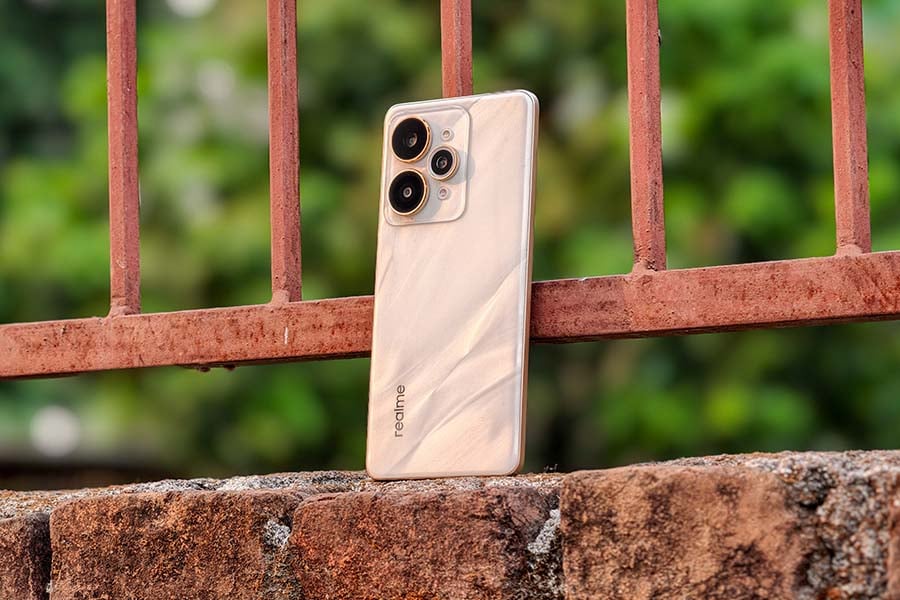
But probably the biggest highlight of this phone is its massive 7000mAh battery. Battery life is excellent, and for most people, this can easily last up to two days on a single charge. Realme also includes an 80W charger inside the box, which is great to see. On top of that, the phone has a premium in-hand feel, good stereo speakers, and even IP68/IP69 ratings. The only real downside here is that there is no telephoto camera, which is something some other phones in this price range do offer.
| Pros | Cons |
|---|---|
| Premium design with curved AMOLED display | No telephoto lens |
| Class-leading 7000mAh battery life | Curved display may not be for everyone |
| Clean and polished user experience | |
| Bright 144Hz AMOLED panel |
Realme 15 Pro Specifications:
- Display: 6.8″ AMOLED, 1B colors, 144Hz, 3840Hz PWM dimming, 6500 nits peak
- Chipset: Qualcomm Snapdragon 7 Gen 4
- RAM / Storage: 12GB RAM, 256GB storage
- Rear Cameras: 50MP main (OIS) + 50MP ultrawide
- Front Camera: 50MP, supports 4K@30fps
- Battery: 7000mAh, 80W wired charging
- OS: Android 15 with Realme UI 6.0
- Build/Features: IP68/IP69, MIL-STD-810H, under-display fingerprint sensor, stereo speakers, NFC
- Price in Nepal: NPR 66,999 (12/256GB)


5. OnePlus Nord 5
The no. 5 spot for the ‘best phone under 70K’ goes to the OnePlus Nord 5. Despite the huge 6800mAh battery, it feels surprisingly comfortable in the hand right out of the box. The IP65 rating is a bit of a compromise, but overall, the build feels solid. The display is one of the best in this segment. The 144Hz OLED panel is bright at 1400 nits, has minimal bezels, supports HDR10, and the 3000Hz touch sampling rate makes everything feel extremely smooth, which is especially noticeable while gaming.
The Snapdragon 8s Gen 3 manages everything smoothly, from gaming at high fps to no overheating during long use. OxygenOS is fast and responsive, with four years of OS and six years of security updates. Drawbacks include UFS 3.1 instead of UFS 4.0, no wireless charging, and a USB-C port limited to 2.0 speeds.
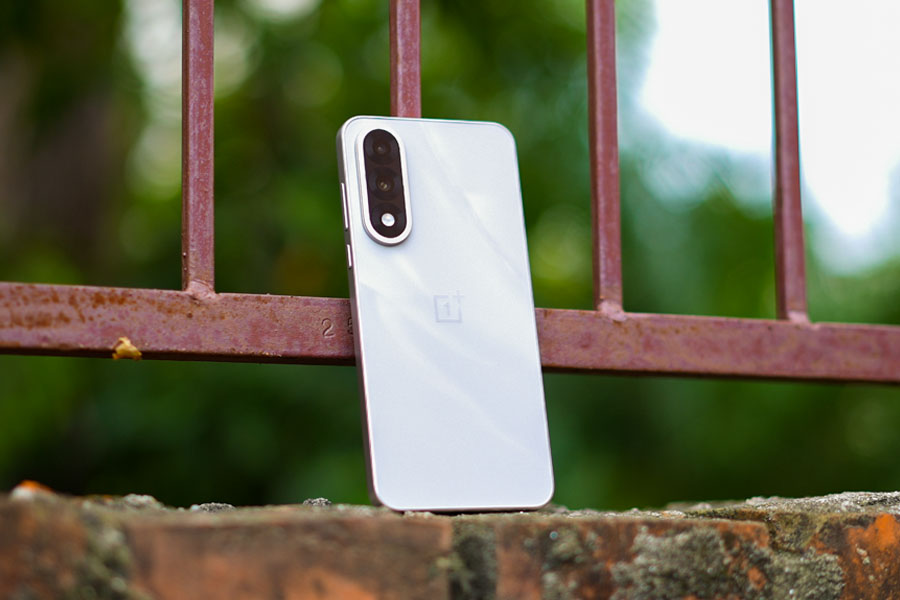
The camera is where compromises are most noticeable. The 50MP main sensor captures good shots in daylight; portraits are solid, and selfies are excellent thanks to the new 50MP front camera. The 8MP ultrawide, however, feels outdated, and low-light performance is inconsistent. Video recording supports up to 4K at 60fps on both front and rear cameras, which is great, but the ultrawide camera limits it.
Still, across design, display, performance, battery life, and software, the Nord 5 impressed me. In my experience, it is easily the best midrange phone if you want the best performance and a well-rounded experience under NPR 70,000.
| Pros | Cons |
| Strong performance with great cooling | Camera system is average, especially ultrawide |
| Good battery life with fast charging | No charger inside the box |
| Premium design and solid haptics | |
| Excellent 144Hz OLED display | |
| Clean and fast OxygenOS experience |
OnePlus Nord 5 Specifications:
- Display: 6.83-inch 1.5K AMOLED, 144Hz, Gorilla Glass 7i
- Chipset: Qualcomm Snapdragon 8s Gen 3
- Memory: 8GB RAM, 256GB storage
- Rear Camera: 50MP main + 8MP ultrawide
- Front Camera: 50MP
- Battery: 6800mAh
- Charging: 80W wired charging
- Software: Android 15 with OxygenOS 15
- Durability: IP65 rating
- Price in Nepal: NPR 67,999 (8/256GB)
- Read our OnePlus Nord 5 review
4. Samsung Galaxy A37
If you specifically want a Samsung phone under Rs. 70,000, the Samsung Galaxy A37 is a very safe and practical option, especially after the Rs. 5,000 cashback offer. With the cashback, the Galaxy A57 becomes a much better value-for-money Samsung phone in Nepal.
The Galaxy A37 does not completely reinvent the formula compared to last year’s A36, but it sticks to what Samsung does well. You get a clean and polished One UI experience, along with up to 6 years of OS updates, which means better long-term software support and better resale value.
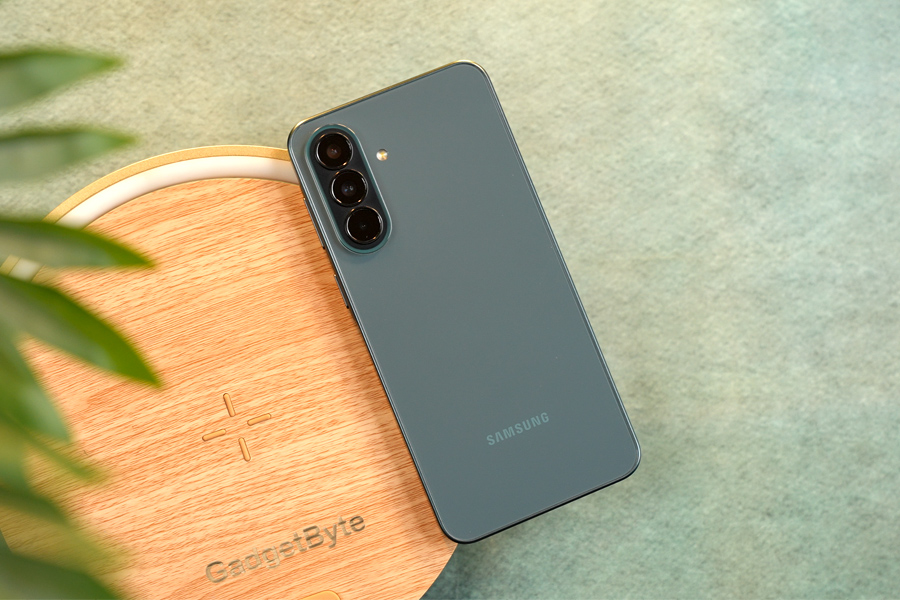
The display is also one of the biggest strengths of this phone. It has a 6.7-inch Super AMOLED Plus display with a 120Hz refresh rate, and as expected from Samsung, the colors, brightness, and overall viewing experience are excellent.
Design is another highlight. The Galaxy A37 looks premium and minimal, and this year, Samsung has also added IP68 protection, making it more durable against dust and water. The cameras are also pleasing for both photos and videos. You get nice-looking photos from the main camera, decent ultrawide shots, and reliable selfie performance.
The main weakness is performance. The Galaxy A37 is powered by the Exynos 1480, which is fine for normal users, but it is not the best gaming chip in this price range. The speakers, haptics, and vibration feedback are also just decent, not flagship-level. Battery life is good with a 5000mAh battery, and in Nepal, Samsung also includes a 25W charger in the box.
| Pros | Cons |
|---|---|
| Excellent Samsung AMOLED display | Performance is only decent |
| Clean One UI experience | Not the best option for gaming |
| 6 years of OS updates | Haptics are average |
| Good resale value | Speakers are just decent |
Samsung Galaxy A37 Specifications:
- Display: 6.7-inch FHD+ Super AMOLED Plus, 120Hz
- Chipset: Samsung Exynos 1680
- Memory: 8GB RAM, 128GB / 256GB storage
- Rear Camera: 50MP main + 12MP ultrawide + 5MP macro
- Front Camera: 12MP
- Battery: 5000mAh
- Charging: 25W wired charging
- Software: One UI based on Android 16
- Durability: IP68 dust and water resistance
- Price in Nepal: NPR 67,999 (8/256GB after cashback)
- Read our Galaxy A37 review
3. Redmi Note 15 Pro Plus
At number 3, we have the Redmi Note 15 Pro’s bigger brother, the Redmi Note 15 Pro Plus. At exactly Rs. 70,000, this phone offers 512GB of storage, which is something none of the other brands are offering in this price segment. So if you want a phone with a lot of storage for photos, videos, apps, and games, this is easily one of the best options under Rs. 70,000.
Apart from storage, there are a few more reasons to choose the Note 15 Pro Plus over the regular Note 15 Pro. First, the camera performance is slightly better here. In our testing, its 200MP main camera performed better than the regular Pro model. Likewise, performance is also a little better since we get the Snapdragon 7s Gen 4 here instead of the Dimensity 7400 on the Note 15 Pro.
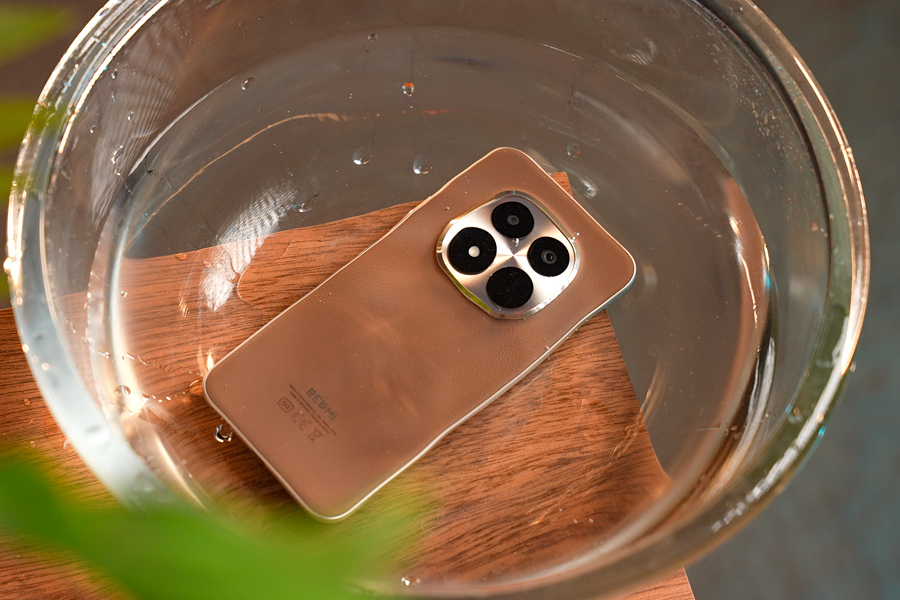
The selfie camera is also slightly improved, and charging is much faster too. You get 100W fast charging here, compared to 45W on the regular Note 15 Pro. So overall, if you can spend a little extra, the Note 15 Pro Plus makes more sense.
Durability is another strong part of this phone. You still get drop resistance up to 2.5 meters, Gorilla Glass Victus 2 protection, and IP68/IP69K dust and water resistance. But the biggest reason to buy this phone is definitely the 512GB storage.
| Pros | Cons |
|---|---|
| 512GB storage under Rs. 70,000 | Performance is good, but not the best for gaming |
| Better 200MP camera than Note 15 Pro | Software experience may not be for everyone |
| Faster 100W charging | No dedicated telephoto camera |
| Strong durability with Victus 2 / IP68/IP69K rating |
Redmi Note 15 Pro Plus Specifications:
- Display: 6.83-inch 1.5K AMOLED, 120Hz, up to 3200 nits peak brightness
- Chipset: Qualcomm Snapdragon 7s Gen 4
- Memory: 12GB RAM, 512GB storage
- Rear Camera: 200MP main camera + 8MP ultrawide camera
- Front Camera: 32MP Selfie camera
- Battery: 6500mAh
- Charging: 100W HyperCharge
- Software: Android 16 with HyperOS 3
- Durability: Gorilla Glass Victus 2, IP68/IP69/IP69K rating
- Price in Nepal: Rs. 69,999 (12/512GB)
- Read our Redmi Note 15 Pro Plus review
2. Poco X8 Pro
If gaming is your main priority under Rs. 70,000 in Nepal, the Poco X8 Pro is easily one of the best options right now. The biggest highlight here is performance. It is powered by the MediaTek Dimensity 8500-Ultra, paired with LPDDR5X RAM and UFS 4.1 storage, which makes it one of the fastest phones in this price segment. You also get a fast 1.5K 120Hz AMOLED display with excellent touch response, including up to 2560Hz instantaneous touch sampling rate under Game Turbo mode.
In real-world gaming, the Poco X8 Pro delivers a near-flagship experience. You can play demanding games like Genshin Impact at high settings with stable 60fps, while PUBG also supports 120fps gameplay with strong average FPS and good 1% lows. Heating is also managed well, and the phone cools down pretty quickly thanks to its large vapor chamber cooling system.
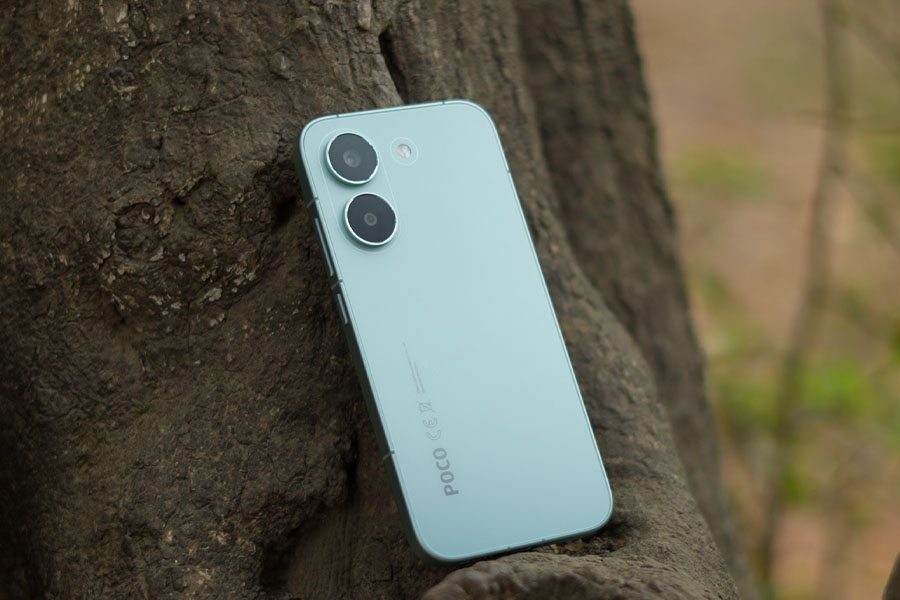
Apart from gaming, the Poco X8 Pro also has a fairly compact and pocketable form factor. The design is minimal for a gaming phone, so it does not look overly aggressive. You also get a big 6500mAh battery, 100W fast charging, and the charger is included inside the box. The haptics and speakers are also good.
The only average part of this phone is the camera. It is fine for casual photos and videos, but this is definitely not a camera-focused phone. If gaming and performance matter more to you, the Poco X8 Pro is one of the strongest picks under Rs. 70,000.
| Pros | Cons |
|---|---|
| Excellent gaming performance | Cameras are average |
| Fast 120Hz AMOLED display with great touch response | Software experience may not be for everyone |
| Large battery with 100W charging | |
| Good haptics and speakers |
Poco X8 Pro Specifications:
- Display: 6.59-inch 1.5K AMOLED, 120Hz, up to 3500 nits peak brightness
- Chipset: MediaTek Dimensity 8500-Ultra
- Memory: 8GB RAM, 256GB storage
- Rear Camera: 50MP main (OIS) + 8MP ultrawide
- Front Camera: 20MP
- Battery: 6500mAh
- Charging: 100W HyperCharge
- Software: Android 16 with HyperOS 3
- Durability: Gorilla Glass 7i
- Price in Nepal: NPR 63,999 (8/256GB)
- Read our Poco X8 Pro review
1. Nothing Phone 4a
At number 1, we have the Nothing Phone 4a. This was already one of the best phones under Rs. 60,000, and even under Rs. 70,000, it still remains one of the strongest overall options right now.
With the Nothing Phone 4a, you get 12GB RAM and 256GB storage for Rs. 71,000. But the biggest highlight of this phone is not just the hardware. It is the overall experience. The software experience on this phone is very clean, smooth, and enjoyable, which makes it feel different from most other Android phones in this segment.
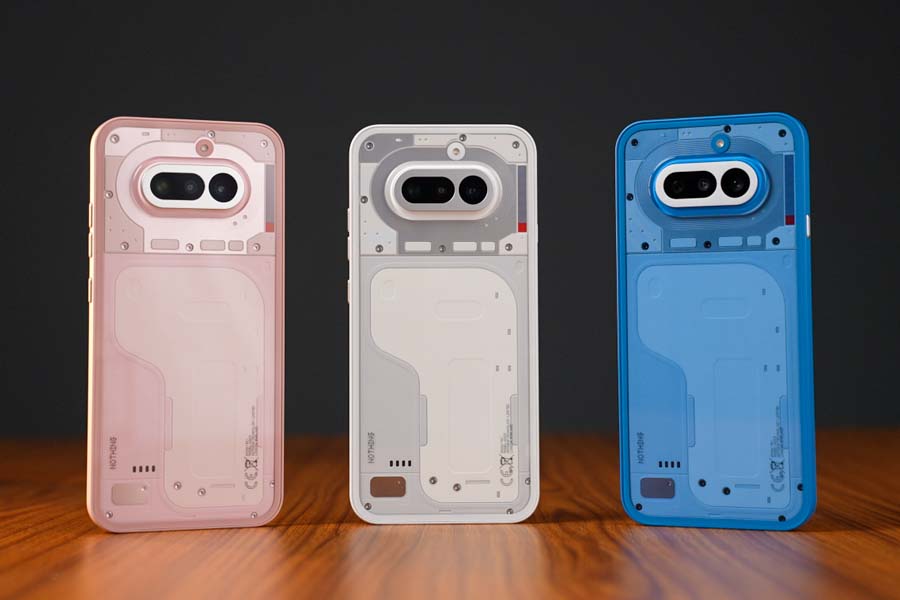
Camera performance is another big reason to buy this phone. The main camera is very good, and the 3.5x telephoto lens is especially useful for portraits. It captures really nice portrait photos, which is something most phones in this price range still struggle with. The selfie camera is also not bad.
Another unique thing about the Nothing Phone 4a is its design. It has a very different identity compared to other phones, and the pink color edition especially looks amazing. The AMOLED display is also really good, so the overall multimedia experience is solid.
The only major weaknesses are battery life and charging. The battery life is not as strong as some of the Chinese phones in this list, and you also do not get a charger inside the box.
| Pros | Cons |
| Clean and enjoyable software experience | Battery life is not the best in this segment |
| Very good main camera | No charger inside the box |
| Excellent 3.5x telephoto portraits | Charging is slower than some rivals |
| Unique and stylish design | |
| Good AMOLED display |
Nothing Phone 4a Pro Specifications:
- Display: 6.83-inch AMOLED, 1.5K, 144Hz refresh rate
- Chipset: Qualcomm Snapdragon 7 Gen 4
- Memory: 12GB RAM, 256GB storage
- Rear Camera: 50MP main + 50MP 3.5x periscope telephoto + 8MP ultrawide
- Front Camera: 32MP
- Battery: 5080mAh
- Charging: 50W wired charging
- Software: Nothing OS 4.1 based on Android 16
- Durability: IP65 rating
- Price in Nepal: Rs. 65,499 (8/256GB) | Rs. 70,999 (12/256GB)
- Read our Nothing Phone 4(a) Review
Summary list of the best mobile phones under NPR 70000 in Nepal
| S.N. | Best Phones Under NPR 70,000 | Price | Best For |
| 1 | Nothing Phone 4a (8/256GB) | NPR 65,499 | Unique design + best camera + reliable software experience |
| 2 | Poco X8 Pro (8/256GB) | NPR 63,999 | Best gaming phone with 120fps support in most games |
| 3 | Redmi Note 15 Pro Plus (12/512GB) | NPR 69,999 | Best storage option with 512GB storage + best durability |
| 4 | Samsung Galaxy A37 (8/256GB) | NPR 67,999 | Best Samsung experience + Rs. 5,000 cashback offer |
| 5 | OnePlus Nord 5 (8/256GB) | NPR 67,999 | Best performance + Software Experience |
| 6 | Realme 15 Pro (12/256GB) | NPR 66,999 | Best battery life |
Note: Phones marked with an asterisk (*) are slightly above the Rs. 70,000 budget, usually by around Rs. 1,000 to Rs. 2,000. We may still included them in this list because that small price difference can sometimes get you a significantly better overall product.
You might also like:
Frequently Asked Questions
Article Last updated: June 22, 2026