Looking for the best mobile phone under 1 lakh in Nepal? Check out our finely curated list, where we’ve listed all the best phones under 1 lakh you can buy in Nepal right now.

If you are looking for the best phones under 1 lakh in Nepal, you're in luck. Because in this buying guide, we've listed the top options available in 2026 for you. In this price range, you get near-flagship performance, premium displays, powerful cameras, and fast charging, making these phones a great value for money. To help you decide, here is our list of the best phones under NPR 100,000 (1 lakh) in Nepal.
How To Find The Best Phones Under 1 Lakh in Nepal
Finding a balanced phone in the 1 lakh price range is a challenging decision, especially in a country like Nepal, where we don't have access to a wide range of great mid-range and semi-flagship phones. Unlike both our neighboring countries. Still, there are many phones available in Nepal, each with its own strengths and weaknesses, and knowing what to look for in a phone helps a lot.
For phones under 1 lakh, you should expect at least a 120Hz OLED display. Beyond that, look for a very bright and color-accurate OLED panel with a high touch sampling rate and strong vibration feedback. They should be powered by a Snapdragon “7” series or a Dimensity 8000 series processor.
Camera quality is equally essential if you're spending 1 lakh on a phone, and it’s worth aiming for a good telephoto lens and solid video recording capabilities at this price. Look for official IP ratings, ideally IP68 or 69, metal frames, and fast charging above 45W if possible.
| Note: In this list, we have also included a few smartphones that cost more than NPR 1 lakh — but not by a lot. We’ve done this so that you can further curate your choices and also because we don’t want you to miss any good deal by spending NPR 3000 – 4000 more. The prices of such products are marked with an asterisk (*) at the end. |
Best Phones Under 1 Lakh in Nepal:
7. Samsung Galaxy A57
And kicking things off is the new Samsung Galaxy A57. It's actually a little sad that Samsung's “A” series phone has somehow made its way into our list of best phones under 1 lakh in Nepal, but with the rising smartphone prices, that's the harsh reality we're living in right now.
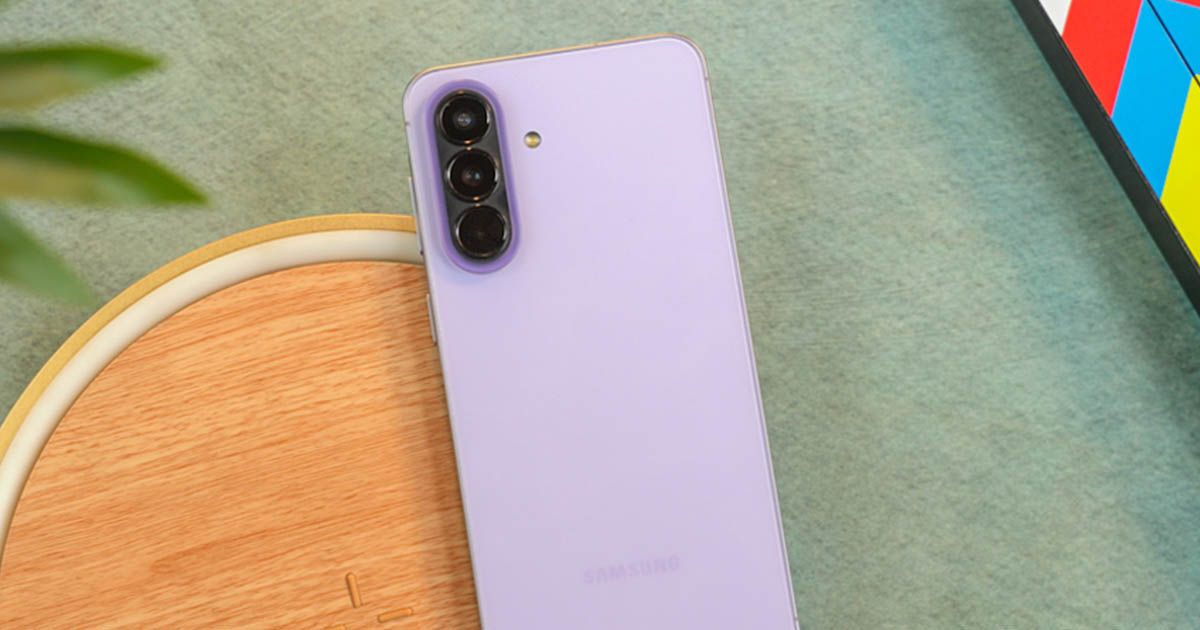
Anyway, the Galaxy A57 doesn't have many upgrades over last year's Galaxy A56 (review). It is slightly slimmer now (and also slightly lighter), and we found it to be quite easy to handle in everyday use. The Galaxy A57 also scores top points in terms of durability since it has a proper dust and water-sealed design, thanks to an IP68 rating. Whereas its Gorilla Glass Victus+ protection (on both sides, by the way) also assured us of an incredibly durable phone.
Samsung's display game is on point, too. The colors look fantastic, and it feels perfectly responsive to type on (which is further elevated by crisp haptics). And while One UI 8.5, based on Android 16, on the Galaxy A57 offers one of the best software experiences out there, we were quite let down with the gaming performance here.
The Exynos 1680 chip inside this thing handles casual daily use with no problem, but gaming is a major miss here. And since Samsung didn't bring any camera upgrades, that's another thing the Galaxy A57 disappointed us with. For a phone that costs nearly 1 lakh rupees, it doesn't have a dedicated zoom camera. So while its primary and selfie camera don't leave much room for complaint, the Galaxy A57's cameras are a solid B+ only.
| Pros | Cons |
|---|---|
| A premium design | No Zoom Camera |
| Best-in-class software experience | Subpar gaming experience |
| Nice display, decent battery life |
Samsung Galaxy A57 Specifications:
- Design and Build: 161.5 x 76.8 x 6.9 mm, 179 grams, IP68 dust/water resistance
- Display: 6.7-inch AMOLED display, FHD+ resolution, 120Hz refresh rate, Corning Gorilla Glass Victus+ protection
- Chipset: Samsung Exynos 1680, 4nm mobile platform
- Memory: 8GB / 12GB RAM, up to 512GB internal storage, non-expandable
- Software and UI: One UI 8.5 based on Android 16
- Rear Camera: Triple camera setup — 50MP main + 12MP ultrawide + 5MP macro
- Front Camera: 12MP selfie camera, hole-punch cutout
- Security: Optical in-display fingerprint sensor, face unlock
- Audio: Stereo speakers
- Battery: 5000mAh battery
- Charging: 45W wired charging, power adapter not provided in the box
- Price in Nepal: NPR 84,999 for 8/256GB | NPR 89,999 for 12/256GB
- Read our Samsung Galaxy A57 review


6. POCO X8 Pro Max
The newly launched POCO X8 Pro Max also finds a spot on our list of best phones under 1 lakh in Nepal. You hear the name POCO, and the first thing that comes to mind is probably “gaming”. And the X8 Pro Max follows a similar formula as well. It is powered by MediaTek's Dimensity 9500s chip, whose performance is similar to that of the Snapdragon 8 Gen 5.
In our gaming tests, we were able to play popular titles like PUBG Mobile and Mobile Legends: Bang Bang at almost a steady 120 fps. Even Genshin Impact ran at a near-steady 60 fps at the highest graphic settings, so that should tell you how impressive its gaming ability is.
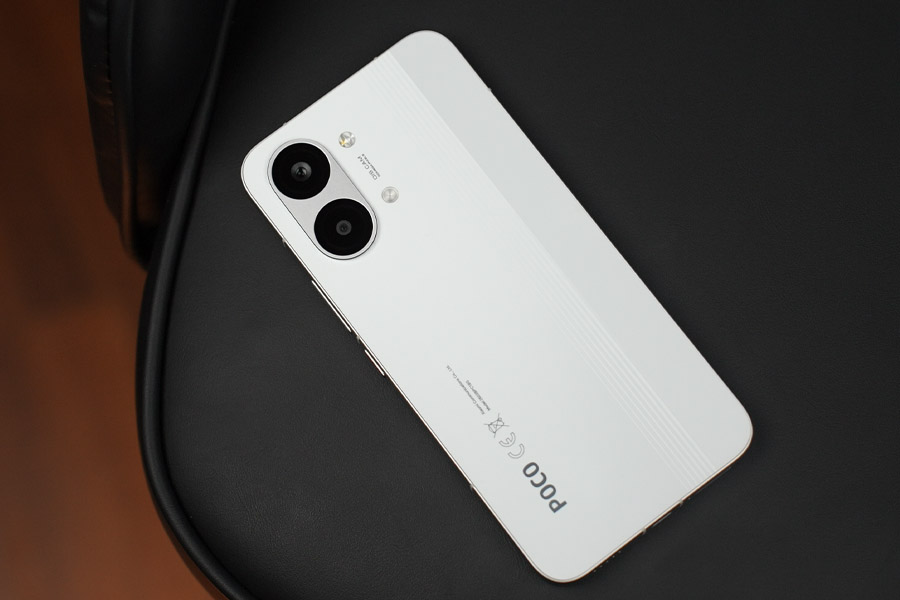
Of course, high fps numbers don't mean anything if the phone's temperature gets uncomfortable to touch. But thankfully, even when pushing 120 fps on PUBG or 60 fps on Genshin, the max surface temperature we recorded on the POCO X8 Pro Max was around 41°C only!
Besides excellent gaming, we were quite fond of its clean design as well. Its display is also one of the best for the price, whereas a gigantic 8,500 mAh battery on the POCO X8 Pro Max means this thing has ridiculous battery life too. Managing up to 12 hours of screen time. But like the Galaxy A57, this POCO phone's major Achilles' heel is its camera as well.
| Pros | Cons |
|---|---|
| Excellent gaming experience | Weak cameras |
| Unbelievable battery life | HyperOS still needs some refinement |
| A clean design |
POCO X8 Pro Max Specifications:
- Design and Build: 162.9 x 77.9 x 8.2 mm, 218 grams, IP68 dust/water resistance
- Display: 6.83-inch AMOLED display, 1.5K resolution, 120Hz refresh rate, Corning Gorilla Glass 7i protection
- Chipset: MediaTek Dimensity 9500s, 3nm mobile platform
- Memory: 12GB LPDDR5X RAM, 256GB / 512GB UFS 4.1 storage, non-expandable
- Software and UI: HyperOS 3 based on Android 16
- Rear Camera: Dual camera setup — 50MP main + 8MP ultrawide
- Front Camera: 20MP selfie camera, hole-punch cutout
- Security: Ultrasonic in-display fingerprint sensor, face unlock
- Audio: Symmetrical stereo speakers, Dolby Atmos, Hi-Res Audio
- Battery: 8500mAh battery
- Charging: 100W wired charging, 100W power adapter included in the box
- Price in Nepal: NPR 79,999 for 12/256GB | NPR 89,999 for 12/512GB
- Read our POCO X8 Pro Max review
5. OnePlus 15R
And taking the 5th position on our list is none other than the OnePlus 15R. Like the POCO X8 Pro Max before it, the OnePlus 15R also goes big on gaming. It is powered by a Snapdragon 8 Gen 5 chip, which might sound like it's a lot similar to the flagship 8 Elite Gen 5 processor, but its CPU and GPU are roughly 25% and 35% slower.
That said, the OnePlus 15R actually borrows a lot of its gaming heritage from the flagship OnePlus 15 (review). It has the same 165Hz display—which has been optimized to play different first-person shooters like PUBG and Call of Duty at 165 fps! And even when pushing such high frame rates, the OnePlus 15R never crossed 40°C when we measured its temperature.
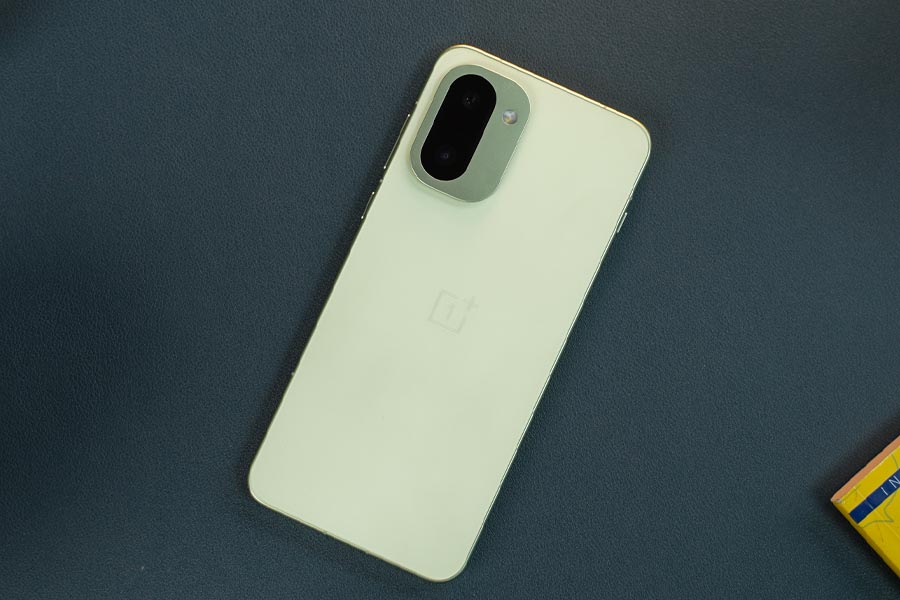
Other than this, the OnePlus 15R also has a dedicated touch response chip and a custom G2 WiFi chip. Just like the OnePlus 15. So all in all, with its incredible gaming results and excellent thermals, the OnePlus 15R is the best gaming phone in Nepal under 1 lakh as well.
We were also more than impressed with its battery life. It gets its juice from a 7,400 mAh battery, which consistently netted us around 10 hours of screen on time. The OnePlus 15R also has a nice, clean design, OxygenOS 16 is so fluid and responsive, and its haptics are top-notch as well. But like every phone I've talked about so far, this guy's cameras are nothing writing home about either. We managed to get some decent shots in particularly well-lit conditions, but if camera is your priority, the OnePlus 15R isn't made for you.
| Pros | Cons |
|---|---|
| Best gaming experience for the price | Average cameras |
| Terrific battery life | |
| OxygenOS 16 is really good |
OnePlus 15R Specifications:
- Design and Build: 163.41 x 77.04 x 8.3 mm, 214–215 grams, IP66 + IP68 + IP69K dust/water resistance
- Display: 6.83-inch AMOLED display, 1.5K resolution, 165Hz refresh rate, Corning Gorilla Glass 7i protection
- Chipset: Qualcomm Snapdragon 8 Gen 5, 3nm mobile platform
- Memory: 12GB LPDDR5X RAM, 256GB / 512GB UFS 4.1 storage, non-expandable
- Software and UI: OxygenOS 16 based on Android 16
- Rear Camera: Dual camera setup — 50MP main + 8MP ultrawide
- Front Camera: 32MP selfie camera, hole-punch cutout
- Security: Ultrasonic in-display fingerprint sensor, face unlock
- Audio: Stereo speakers
- Battery: 7400mAh battery
- Charging: 80W wired charging, power adapter not provided in the box
- Price in Nepal: NPR 98,499 for 12/256GB
- Read our OnePlus 15R review
4. POCO F8 Pro
The POCO F8 Pro, on paper, is an absolute monster. And in our real-life use as well, we found that to hold true. This is a compact phone with last year's flagship Snapdragon 8 Elite chip inside, a sizable 6,120 mAh battery, and a dedicated telephoto camera. Yep. The POCO F8 Pro is the first phone on this list of best phones under 1 lakh to feature a proper zoom lens. And if that's the exact combo you're shopping for, it simply doesn't get better than the POCO F8 Pro for the price.
Like the POCO X8 Pro Max I talked about before, the F8 Pro's biggest selling point is its gaming ability as well. What surprised us is that despite being a compact phone, the POCO F8 Pro's thermals are surprisingly great. Because even when we pushed it through PUBG at 120 fps or Genshin at the highest possible settings, it never went beyond 41°C!
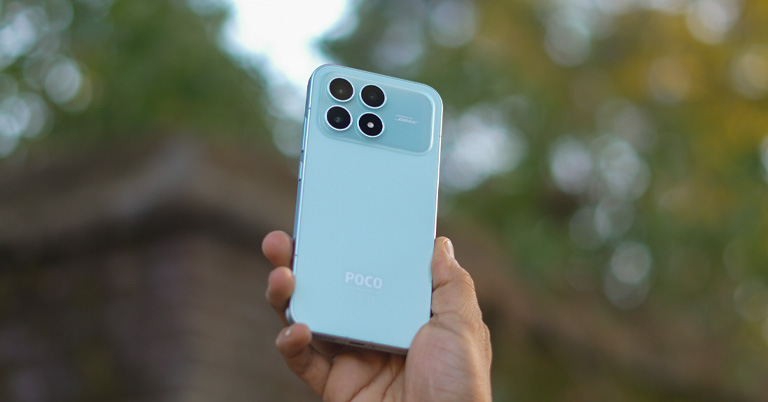
And since it has a 2.5x telephoto lens, we had high hopes with the POCO F8 Pro's cameras as well. But it seems POCO still has a lot of homework to do if it ever wants to impress us in the camera department, because besides its telephoto and selfie cameras, the primary and ultrawide shooters on the F8 Pro are hardly worth talking about.
What we will give POCO a lot of credit for, though, is how comfortable this phone is to hold. For a device packing a 6000+ mAh battery, it somehow doesn't feel like a brick. The battery life is also predictably excellent—and that 100W charging that fills it up in under 40 minutes is also chef's kiss.
Overall, if you are into gaming and do not care much about the cameras, then the F8 Pro is perhaps the smartest buy in this entire list. Especially if you're leaning towards something that is nice and compact in size.
| Pros | Cons |
|---|---|
| Flagship performance | Average cameras |
| Great battery life | Bloatwares |
| Premium display with ultrasonic sensor |
POCO F8 Pro Specifications:
- Design and Build: 157.49 x 75.25 x 8 mm, 199 grams, IP68 dust/water resistance
- Display: 6.59-inch AMOLED display, FHD+ resolution, 120Hz refresh rate, Corning Gorilla Glass 7i protection
- Chipset: Qualcomm Snapdragon 8 Elite, 3nm mobile platform
- Memory: 12GB LPDDR5X RAM, 256GB / 512GB UFS 4.1 storage, non-expandable
- Software and UI: HyperOS 3 based on Android 16
- Rear Camera: Triple camera setup — 50MP main + 8MP ultrawide + 50MP 2.5x telephoto
- Front Camera: 20MP selfie camera, hole-punch cutout
- Security: Ultrasonic in-display fingerprint sensor, face unlock
- Audio: Sound by Bose, symmetrical stereo speakers
- Battery: 6210mAh battery
- Charging: 100W wired charging, 100W power adapter included in the box
- Price in Nepal: NPR 99,999 for 12/512GB
- Read our POCO F8 Pro review
3. Vivo V70
Finally, the new Vivo V70 is our top 3 pick on this list of best phones under 1 lakh in Nepal right now. Comparing its specs with last year's Vivo V60 (review) might paint a story about how similar they are, but our experience couldn't be further from the truth.
Starting with the design, Vivo has moved back to a nice, flat design (like on the Vivo V25), marking a sharp contrast to the curved design we've been seeing in most “V” series phones lately. Its 6.5-inch AMOLED screen also feels perfect-sized, while Vivo has also thrown in some nice quality-of-life upgrades like an ultrasonic fingerprint reader this time.
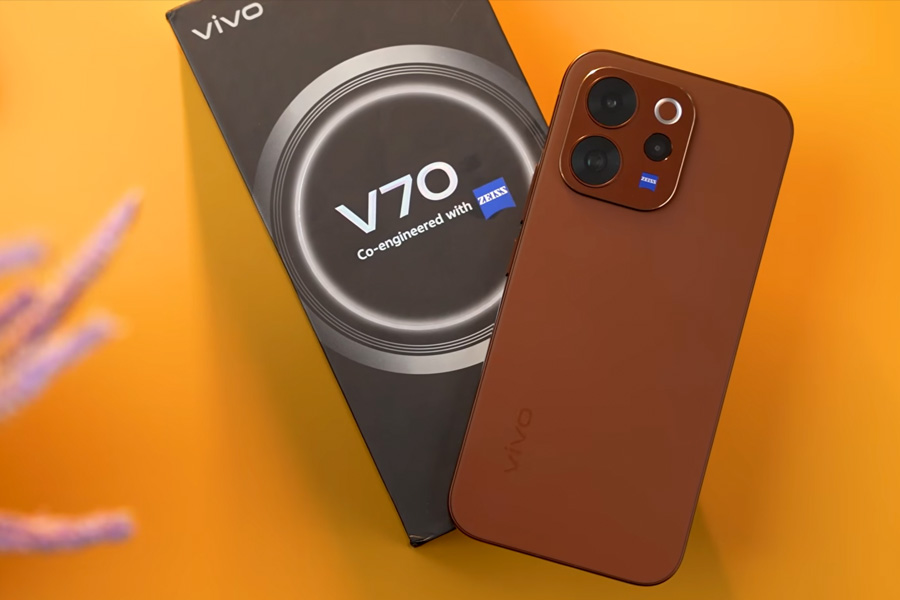
And as expected, the biggest talking point of the Vivo V70 is its cameras. Of course. Vivo didn't really bother with any new hardware upgrades here, but the company's Zeiss collaboration is clearly proving its worth in gold. We're especially fond of its 3x zoom camera (which is a regular telephoto unit instead of one with a periscope mechanism, by the way), which can take stunning portraits.
Vivo V70's main and selfie camera also deserve a special shoutout, but honestly, its 8MP ultrawide shooter is a real bummer. It's honestly not good, and to say it bluntly, we really think it's time to retire such low-res sensors on a phone of this price!
Other than that, the battery life on the Vivo V70 is also a complete non-issue and comes with a 90W fast charger. But it's also not all roses on this thing since its Snapdragon 7 Gen 4 chip (which is what powered the Vivo V60 as well) is simply not as powerful as some other phones on this list. The move from FuntouchOS to OriginOS is certainly a welcome change, but we definitely would've preferred to see a more powerful hip on the Vivo V70. So while it's a perfectly balanced phone overall, gamers should be eyeing something like the OnePlus 15R or the POCO F8 Pro.
| Pros | Cons |
|---|---|
| Premium flat design | Weak performance for gaming |
| Nice selfies | Poor ultrawide camera |
| Excellent portraits & strong battery life |
Vivo V70 Specifications:
- Design and Build: 157.49 x 75.25 x 8 mm, 199 grams, IP68 + IP69 dust/water resistance
- Display: 6.59-inch AMOLED display, 1.5K resolution, 120Hz refresh rate, Schott Xensation Core glass protection
- Chipset: Qualcomm Snapdragon 7 Gen 4, 4nm mobile platform
- Memory: 8GB / 12GB LPDDR5X RAM, 256GB UFS 4.1 storage, non-expandable
- Software and UI: OriginOS 6 based on Android 16
- Rear Camera: Triple camera setup — 50MP main + 8MP ultrawide + 50MP 3x telephoto
- Front Camera: 50MP selfie camera, hole-punch cutout
- Security: Ultrasonic in-display fingerprint sensor, face unlock
- Audio: Stereo speakers
- Battery: 6500mAh battery
- Charging: 90W wired charging, 90W power adapter included in the box
- Price in Nepal: NPR 102,999 for 12/256GB
- Read our Vivo V70 review
2. Nothing Phone 4a Pro
The runner up for the best phone under NPR 1 lakh in Nepal right now is the Nothing Phone 4a Pro. And the biggest reason is simple: it offers a very unique experience compared to most other phones in this price segment.
The design is obviously one of its main highlights. You get Nothing’s signature Glyph lights at the back, which are not just for show. You can customize them for different notifications, messages, alerts, and even specific contacts.
But the Nothing Phone 4a Pro is not just about design. It also offers a very balanced overall experience. You get a very good display, decent performance, and excellent software optimization thanks to Nothing OS. Even if the raw hardware is not the most powerful in this segment, the phone feels smooth and enjoyable in day-to-day use because the software is so well optimized.
The cameras are also quite commendable. The 3.5x telephoto lens, in particular, captures really nice portraits, somewhat similar to what we liked on the Vivo V70. So, if you love portrait photography, this is definitely one of the better options in this price range. Build quality is also good. You get Gorilla Glass protection on the back along with an aluminum frame, so the phone feels premium in the hand. However, the IP rating is not as strong as what some Chinese phones offer in this segment.
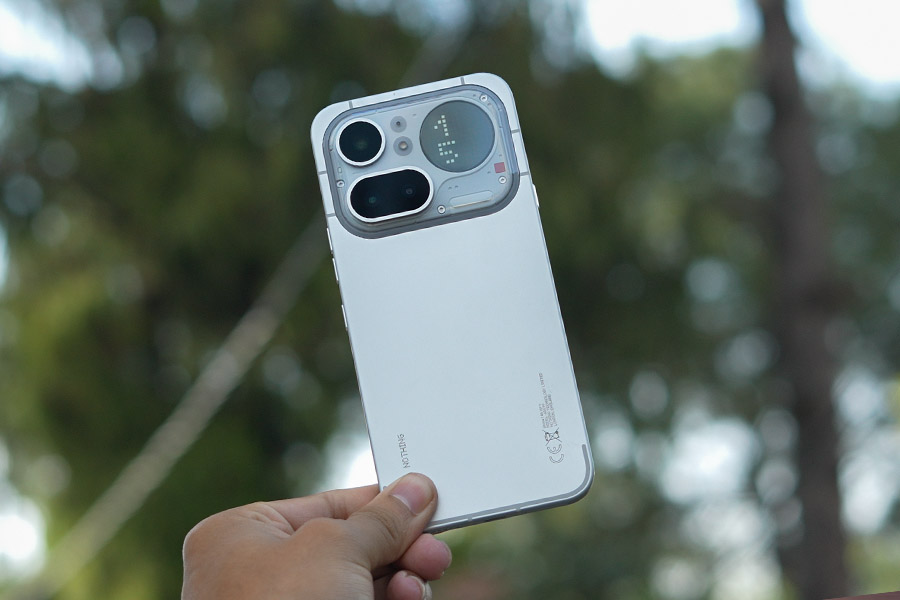
Battery life is another area where the Nothing Phone 4a Pro is decent, but not excellent. Since it does not use silicon-carbon battery technology, you only get a regular 5,000mAh lithium-ion battery. So, the battery backup is fine for normal use, but it is not among the best in this price range. Also, there is no charger included in the box, so you will have to buy one separately.
But the main reason to buy a Nothing Phone is not just the design. It is also the software experience. Nothing OS is clean, smooth, well-optimized, and genuinely enjoyable to use on a daily basis.
So overall, if your budget is around NPR 1 lakh, the Nothing Phone 4a Pro is a very good phone to consider right now. Especially after the Vivo V70 price increase, the Nothing Phone 4a Pro feels like a much better value-for-money option in Nepal.
| Pros | Cons |
|---|---|
| Unique design with Glyph lights | No charger in the box |
| Excellent software experience | Battery life is only decent |
| Good cameras, especially portraits | IP rating is not as strong as some competitors |
Nothing Phone 4(a) Pro Specifications:
- Design and Build: 163.7 x 76.6 x 8 mm, 210 grams, Gorilla Glass 7i front, aluminum frame and back, IP65 rating, Glyph Matrix with 137 individually addressable mini-LEDs
- Display: 6.83-inch AMOLED display, 1260 x 2800 pixels, 144Hz refresh rate, HDR10+, 2160Hz PWM dimming, 5000 nits peak brightness
- Chipset: Qualcomm Snapdragon 7 Gen 4
- Memory: 8GB / 12GB RAM, 128GB / 256GB UFS 3.1 storage, non-expandable
- Software and UI: Nothing OS 4.1 based on Android 16, up to 3 major Android upgrades
- Rear Camera: Triple camera setup — 50MP main with OIS + 50MP 3.5x periscope telephoto with OIS + 8MP ultrawide
- Front Camera: 32MP selfie camera, hole-punch cutout
- Security: Optical in-display fingerprint sensor, face unlock
- Audio: Stereo speakers, no 3.5mm headphone jack
- Battery: 5080mAh global variant / 5400mAh India variant
- Charging: 50W wired charging, power adapter not provided in the box
- Price in Nepal: NPR 93,999 for 12/256GB
- Read our Nothing Phone 4(a) Pro Review
1. Xiaomi 17T
In the number one position for the best phone under NPR 1 lakh in Nepal, we have the Xiaomi 17T. And the reason this phone deserves the top spot is simple: it offers excellent value for money and feels like the most complete, balanced phone in this price segment.
First of all, you are getting 512GB of storage for just NPR 90,000, which already makes it a strong value-for-money option. But more importantly, the Xiaomi 17T does not feel like a phone that is strong in just one or two areas. It is balanced across almost every important aspect.
Starting with the display, the Xiaomi 17T comes with a gorgeous 12-bit OLED panel with Gorilla Glass 7i protection. You also get Dolby Vision and HDR10 support, so the overall display experience is really good. The design is also very comfortable. It does not feel too bulky in the hand, and it is more in line with something like the Vivo V70 rather than a heavier phone like the Nothing Phone 4a Pro. Yes, there are a few compromises. You only get an optical fingerprint sensor here instead of the ultrasonic fingerprint sensor found on the Vivo V70. The frame is also plastic, not aluminum. But despite that, the phone feels really good to hold.
Performance is another strong area of the Xiaomi 17T. It may not be as powerful as gaming-focused phones like the OnePlus 15R or the Poco X7 Pro Max, but for a non-gaming phone, the Dimensity 8500 chip performs really well. The phone also boots on Android 16 out of the box with HyperOS 3.0, and Xiaomi is promising four years of software upgrades, which is really nice to see.
But the biggest highlight of this phone is definitely the camera. Like Xiaomi’s more expensive phones, the cameras here are tuned by Leica, and that makes a difference in the overall image processing and color science. The 5x telephoto lens is particularly impressive because, in this price range, most phones usually offer a 3x or 3.5x zoom camera. But here, you are getting a proper 5x zoom camera, which makes zoom photography better and also helps capture really good portraits.
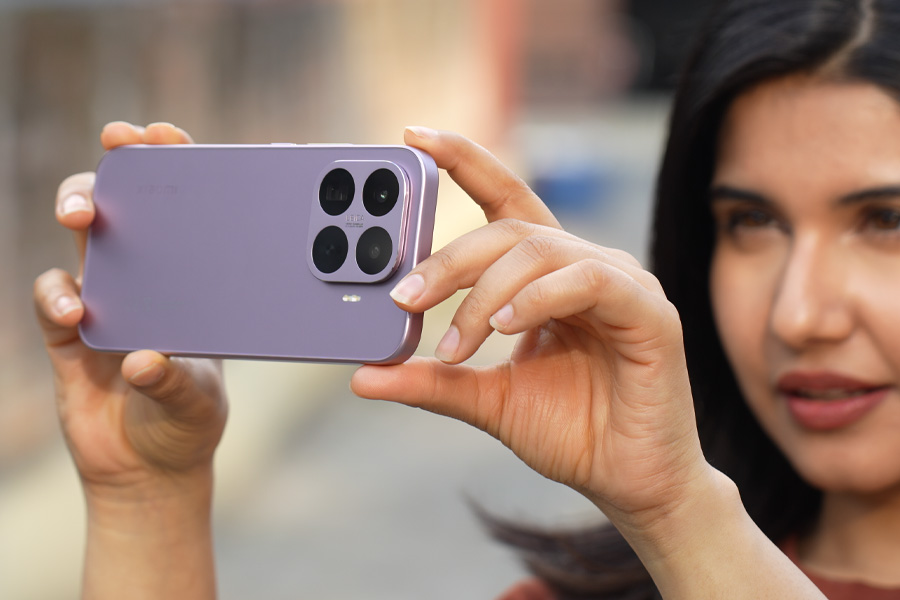
Personally, I especially like the perspective that this 5x camera produces compared to regular 3x or 3.5x telephoto lenses. Portraits look more natural, and since this is Leica-tuned, you also get different Leica portrait modes, including the black-and-white portrait mode, which adds more character to your photos.
Battery life is also very good. The Xiaomi 17T packs a big 6,500mAh battery, so it should comfortably last longer than many other phones in this price range. On top of that, you also get a 67W fast charger inside the box.
So overall, the Xiaomi 17T feels like a complete phone under NPR 1 lakh. And right now, the company is also offering freebies like a Xiaomi Tag and Xiaomi earbuds worth around NPR 6,000, which adds even more value.
| Pros | Cons |
|---|---|
| Excellent value for money with 512GB storage | Plastic frames |
| Gorgeous display and balanced performance | Optical fingerprint sensor only |
| Impressive Leica-tuned cameras | Not the best for hardcore gaming |
Xiaomi 17T Specifications
- Design and Build: 157.6 x 75.2 x 8.17 mm, 200 grams, Gorilla Glass 7i front, plastic frame, IP68 dust/water resistance
- Display: 6.59-inch AMOLED display, 1.5K resolution, 120Hz refresh rate, Dolby Vision, HDR10+, 3840Hz PWM dimming
- Chipset: MediaTek Dimensity 8500 Ultra
- Memory: 12GB LPDDR5X RAM, 256GB / 512GB UFS 4.1 storage, non-expandable
- Software and UI: HyperOS 3 based on Android 16
- Rear Camera: Triple camera setup — 50MP main + 50MP 5x periscope telephoto + 12MP ultrawide
- Front Camera: 32MP selfie camera, hole-punch cutout
- Security: In-display fingerprint sensor, AI face unlock
- Audio: Dual stereo speakers, Dolby Atmos, Hi-Res Audio
- Battery: 6500mAh silicon-carbon battery
- Charging: 67W wired charging, power adapter not provided in the box
- Price in Nepal: NPR 89,999 for 12/512GB
Summary list of the best mobile phones under NPR 1 lakh in Nepal
| S. No. | Best phones under 1 lakh in Nepal | Best for | Price |
| 1 | Xiaomi 17T (12/512GB) | Value for Money | NPR 89,999 |
| 2 | Nothing Phone 4(a) Pro (12/256GB) | Unique Design | NPR 93,999 |
| 3 | Vivo V70 (12/256GB) | Portrait Camera | NPR 102,999* |
| 4 | POCO F8 Pro (12/512GB) | Compact Gaming | NPR 99,999 |
| 5 | OnePlus 15R (12/256GB) | Smooth Android Experience | NPR 98,499 |
| 6 | POCO X8 Pro Max (12/512GB) | Gaming Performance | NPR 89,999 |
| 7 | Samsung Galaxy A57 (12/256GB) | Brand Value | NPR 84,999 |
You might also like:
Frequently Asked Questions
Article Last updated: July 5, 2026