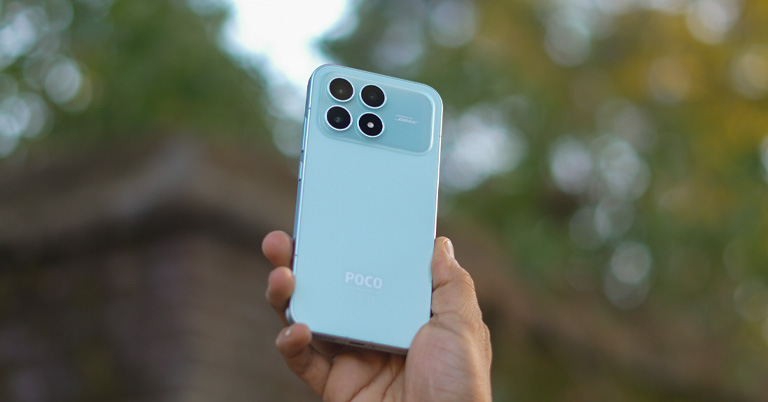
The POCO F8 Pro is a powerful flagship-tier phone in Nepal under 1 lakh, offering top-tier performance, a bright AMOLED display, and fast 100W charging.
Why Trust Gadgetbyte?
At Gadgetbyte, we invest substantial hours into rigorously testing each product or service we review, guaranteeing that you make informed purchases. Learn more about our testing process.
Review Overview
Display
9/10
Design
8.5/10
Battery
9/10
Performance
9.5/10
Rear Camera
7.5/10
Front Camera
7.5/10
Audio and Haptics
8/10
Value for money
9.5/10
The Poco F8 Pro is a performance powerhouse that punches well above its weight. It packs the raw speed of a flagship into a shockingly comfortable and lightweight frame. Yet it carries a heavy compromise: for all its internal might, the camera and software still feel like they're stuck in the shadows.
POCO’s latest flagship is finally here, marking the brand’s comeback in Nepal. Priced at NPR 99,999, the F8 Pro is clearly targeting performance-focused users who don’t want to cross the ultra-premium 1 lakh segment.

With Snapdragon 8 Elite power, a new telephoto camera, and a massive 6210mAh battery, it sounds like a solid deal on paper. But in Nepal — where phones like the OnePlus 15R (review) and Samsung Galaxy S25 FE (review) already compete in this range — does the POCO F8 Pro actually make sense?
Let’s find out in my POCO F8 Pro review.
POCO F8 Pro Specifications
- Design and Build: 157.49 x 75.25 x 8.0mm, 199g, IP68 dust and water resistance, Colors: Titanium Silver, Blue, Black
- Display: 6.59-inch POCO HyperRGB AMOLED, 2510 x 1156 resolution, 120Hz refresh rate, 480Hz touch sampling, 3500 nits peak brightness, 100% DCI-P3, Corning Gorilla Glass 7i,
- Chipset: Snapdragon 8 Elite (3nm), Octa-core CPU (2x 4.32GHz + 6x 3.53GHz), Adreno GPU
- Memory: 12GB + 256GB / 12GB + 512GB, LPDDR5X RAM, UFS 4.15 storage
- Software & UI: Xiaomi HyperOS 3, Android 16
- Rear Camera: 50MP main (Light Fusion 800 sensor, OIS), 50MP telephoto (2.5x optical zoom, 5x lossless zoom, Motion capture), 8MP ultra-wide
- Security: Ultrasonic in-display fingerprint sensor
- Connectivity: 5G, 4G, Wi-Fi 7, Bluetooth 5.4, Dual SIM with eSIM support, NFC, Xiaomi Surge T1+ Tuner, Xiaomi Offline Communication (1km range)
- Battery: 6210mAh (typ), 100W HyperCharge (0-100% in 37 minutes), 22.5W reverse charging, Smart Charging technology
- Price in Nepal: NPR 99,999 (12/512GB)
Poco F8 Pro Review
Design and Build
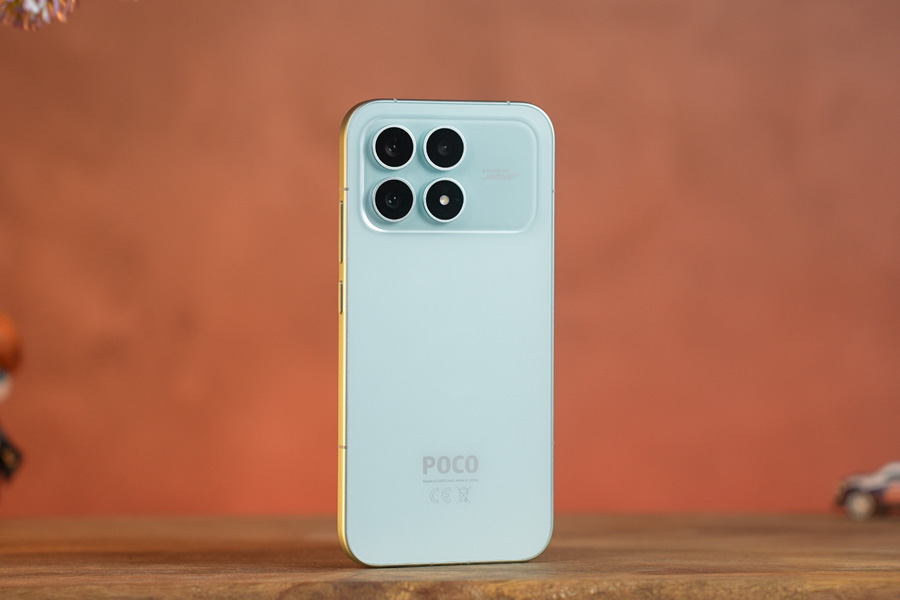
And the first thing I have to let you know is that this is one of the most comfortable phones I have held this year. It has a slightly smaller form factor than before, and it's considerably lightweight even though it has a bigger 6210 mAh battery inside.
Of course, this 6000 mAh battery is no match for the huge 7,400 mAh battery on the OnePlus 15R, but the 15R, for me, is a lot heavier than what I am comfortable with on regular usage.
Usability-wise, this is such a snuggly device that sits well in the hands, and overall, there isn’t much to complain about this design. Actually, it’s a glass back with metal frames, comes in a bunch of cute color options, so I am happy with the design and build!
Display
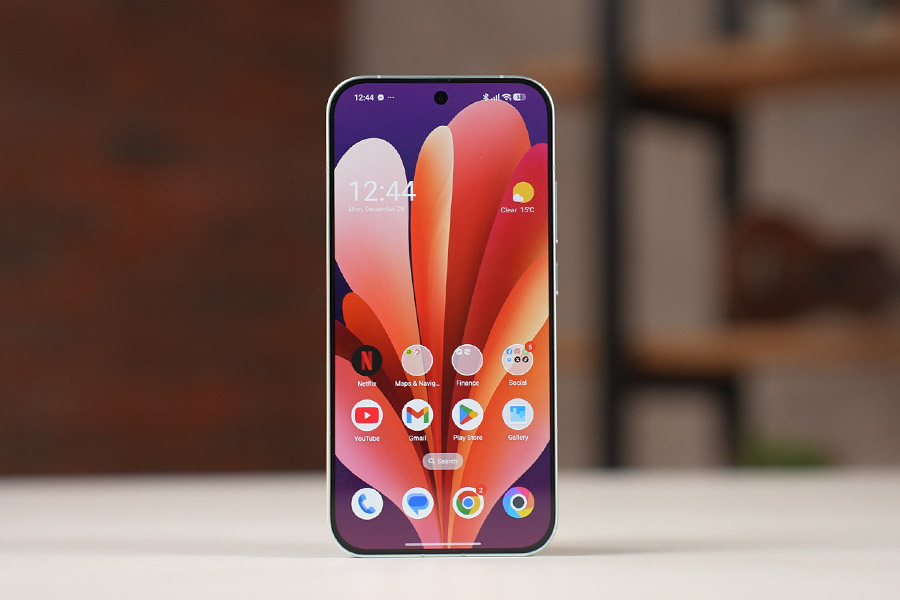
Likewise, its display has a lot to like too. The quality is almost the same as the more expensive F8 Ultra in terms of colors, and both displays are equally bright and responsive to touch. In fact, the F8 Pro features the Gorilla Glass 7i protection as compared to the Poco Shield Glass on the F8 Ultra, so technically it should be more durable.
You also get all the niceties here, like Dolby Vision playback support, high PWM dimming, a very well-calibrated screen that looks absolutely gorgeous, and an ultrasonic fingerprint sensor that's fast and accurate even when my hands are wet.
Having said that, this is not an LTPO screen, so it does not switch between 1-120 Hz refresh rate to conserve battery according to the content on the screen; it can only go between 60-120 Hz. Even so, I was getting good endurance from this phone, like a whole day plus around 20% left at the end of the day.
Battery
The F8 Pro supports 100-watt charging, and using my 65-watt PD charger, I got the phone’s battery juiced up in about 47 minutes.
Speaker
Moving on, Poco has done a good job with the experience side of things with this phone. You get Bose-tuned speakers, and the quality is good for listening to music or watching movies. It sounds really balanced. Also, the vibration while typing or ringing is quite impactful.
But I did compare this phone side by side with the OnePlus 15R, and I found the 15R's speakers to be slightly louder and fuller, not by a whole lot, but it's noticeable.
Performance

That aside, I won’t complain about the performance side of things on the Poco F8 Pro. It features last year’s flagship Snapdragon 8 Elite chip. The 8 Elite, as we know, is a tried and tested chip that gives good results in gaming and benchmarks. In fact, it boasts faster CPU cores than the latest Snapdragon 8 Gen 5 and also has a more powerful GPU, so both CPU and GPU-bound benchmarks show better results from the 8 Elite.
But that’s just benchmarks; even in real-life usage, in tasks like gaming, the phone does not leave much to be desired. You get stable gameplay along with good average fps numbers in games like PUBG, Mobile Legends and even something more taxing like Genshin Impact without throttling the performance so much.
I didn’t notice the phone getting unbearably hot while gaming either. But, the phone definitely goes beyond 42 degrees if you shoot videos at 4k outdoors for more than 25-30 minutes. Doing the same on the OnePlus 15R, the phone can stay relatively cooler, so maybe Poco could have done a better job with the thermals.
OS and UI
Normal everyday performance on the phone is not an issue in any way, though. The HyperOS experience is smooth and lag-free. I wouldn’t say it's the best or even among the best, but it's not bad either. I do wish Poco gave an option to disable or uninstall the bloatware on this phone so that users have a cleaner experience.
Cameras
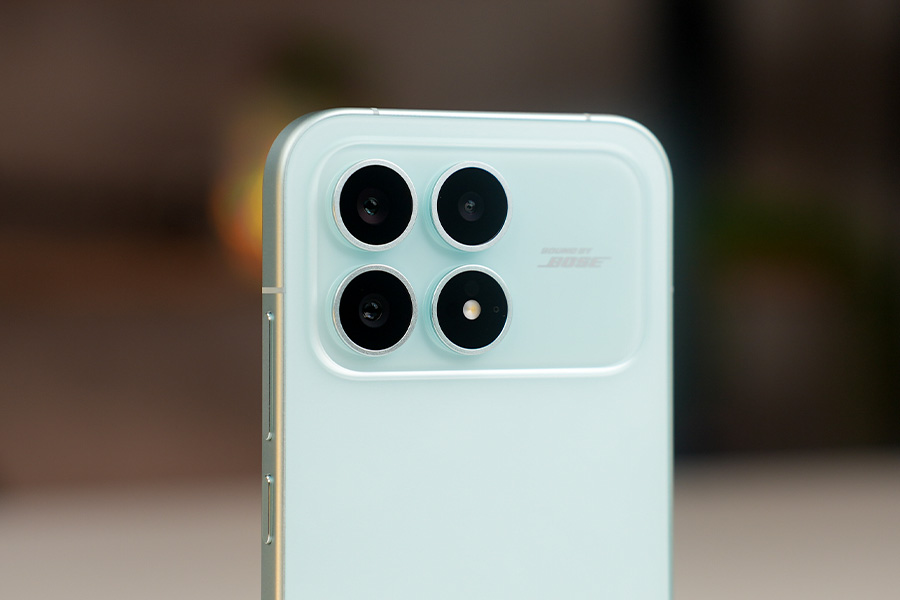
Alright, next let's talk about the cameras, and like always, if there’s one thing that this Poco phone lacks, it’s ‘ a good camera experience! Like spec-wise, there is definitely an upgrade because you get an additional 2.5x Telephoto lens, which wasn’t there on the F7 Pro.
But I don’t know if it’s because of Poco's decision to go with inferior Omnivision sensors or just a lack of better color optimization, the cameras on the Poco F8 Pro are average at best.
Ultrawide
First of all , the 8MP ultra-wide lens does not produce good details and colors in the images. Honestly, the ultra-wide images look like they have been shot from a much cheaper device.
Daylight
The main wide lens is not exactly bad, though. In well-lit conditions, I have gotten some detailed images with nice contrast, but as soon as the phone has to shoot pictures in tricky lighting, the colors and dynamic range start taking a hit.
Low Light
During the night, the contrasty output does look good most of the time, but I really wish they were able to manage glares better. Like, if there’s a bright light source, the phone generally cannot handle the highlights and glares like 90% of the time.
Portrait
The Telephoto lens is not bad, though. I like how the phone is able to maintain good dynamic range in portraits, even when the background is bright. The detailing is good too, and I don’t have many complaints about the skin tone and all, either. In fact, once or twice, the Poco F8 Pro can manage better colors than the more expensive OnePlus 15R.
Selfies
I like the selfies from this phone too. The color tone isn’t the most consistent, like sometimes there's a yellow tint, sometimes there’s a pinkish tint, but quality-wise, I won’t complain much.
Videos
Likewise, at 4k resolution, the main camera produces decent videos. There is a slight movement wobble while you are in motion, but still, videos come out quite well. Obviously, we can’t expect much from the 8MP ultra-wide lens; it can only shoot at 1080p, and the results are just average.
Even the selfie videos are capped at 1080p 60 fps. The colors and overall look are good, but if you make vlogs or reels, you definitely won't be happy with the resolution and sharpness.
Poco F8 Pro Review: Conclusion
At NPR 99,999, the POCO F8 Pro is one of the fastest phones you can buy in Nepal, offering flagship-level performance, a bright AMOLED display, and smooth gaming performance. Its cameras are average, decent in daylight but not great in low light, while the OnePlus 15R cameras are not impressive either, plus it also lacks a telephoto lens. The 15R does have better battery life and a cleaner software experience, but for users who prioritize raw speed, fast charging, and a premium display, the POCO F8 Pro remains a viable choice too.
Poco F8 Pro Review Pros and Cons
Pros
- Flagship performance
- Comfortable ergonomics
- Premium display with ultrasonic sensor
- Great battery life

Cons
- Average cameras
- Bloatware
Article Last updated: February 19, 2026