A photographer's dream phone with the best rear camera system on any smartphone right now
Why Trust Gadgetbyte?
At Gadgetbyte, we invest substantial hours into rigorously testing each product or service we review, guaranteeing that you make informed purchases. Learn more about our testing process.
Review Overview
4.4
Xiaomi 17 Ultra is a near-perfect flagship phone, with the best main camera you'll find on any smartphone right now. But once again, software remains the "Achilles' heel" of Xiaomi phones, while we weren't that happy with its battery life either.
Display
9.5/10
Design
8.5/10
Battery
7.5/10
Performance
10/10
Rear Camera
9.5/10
Front Camera
8.5/10
Audio and Haptics
8.5/10
Value for money
8.5/10
Xiaomi has been making some really great camera phones for three or four years now, and every single year the improvement has been great, to the point where the camera is putting brands like Samsung and Apple to shame. Still, Xiaomi hasn't been doing great overall in terms of sales, mainly because it just doesn't deliver the complete package.
But the Xiaomi 17 Ultra instantly impresses with its features. It's the only brand that retains a full 1-inch sensor for the main camera. It also now has a telephoto camera with hardware-level variable zoom. And that Leica partnership is becoming increasingly integrated. Launched at 2 lakhs in Nepal, could this be the year of the Xiaomi 17 Ultra? After more than 10 days of use, the answer is mostly yes.
Xiaomi 17 Ultra Specifications:
- Design & Build: 8.29mm thickness, 224g, Xiaomi Dragon Crystal Glass 3.0, IP66 + IP68 + IP69 rated, Black / White / Cool Smoke Purple / Starry Green
- Display: 6.9-inch LTPO OLED (TCL CSOT M10 panel), 2608 × 1200 px (1.5K), 1–120Hz adaptive, 12-bit color, 3,500 nits peak brightness, 1060 nits HBM, HDR10+, Dolby Vision
- Chipset: Qualcomm Snapdragon 8 Elite Gen 5 (3nm)
- Memory: 12GB / 16GB LPDDR5X RAM, 512GB / 1TB UFS 4.1 storage
- Software & UI: Android 16 with HyperOS 3.0
- Rear Camera: 50MP Light Fusion 1050L main (1-inch sensor, f/1.67, 23mm, OIS, LOFIC HDR); 200MP HPE periscope telephoto with continuous optical zoom (3.2x–4.3x optical, up to 400mm total); 50MP Samsung JN5 ultra-wide
- Front Camera: 50MP OmniVision OV50M, 4K@60fps video
- Security: 3D ultrasonic in-display fingerprint sensor
- Connectivity: 5G (51 bands), Wi-Fi 7, Bluetooth 6.0, LHDC 5.0, multi-satellite GPS, NFC, IR blaster, UWB, USB-C 3.2 Gen 2
- Sensors: Accelerometer, proximity, gyroscope, compass, barometer
- Battery: 6,000mAh Si/C Li-Ion, 90W wired (PPS), 50W wireless, 22.5W reverse wired charging
- Price in Nepal: NPR 199,999 (16/512GB)


Xiaomi 17 Ultra Review:
Cameras
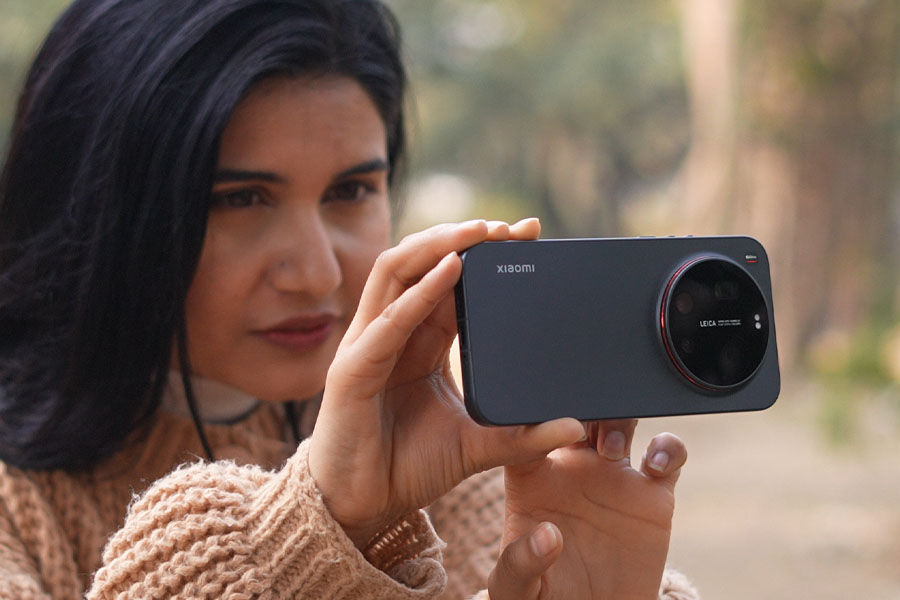
Let's talk about the cameras first, because that's really everything here. One thing you'll notice instantly is that if you shake this phone near your ear, you can actually hear mechanical parts moving inside the camera module — something that doesn't happen with an iPhone or a Samsung. That's because there's an actual mechanical system inside the zoom camera. There is physical movement going on, just like a real camera lens that zooms. It optically zooms from 75mm (3.2x) all the way to 100mm (4.3x), working in steps — 75mm, 85mm, 90mm, and then 100mm. So essentially, four focal lengths to choose from.
Previously, Xiaomi used to give two separate telephoto cameras — one was 3x zoom and the other was 4.3x. This year, they've combined everything into this single unit.
70mm is a very good focal length for portraits, and having the other focal lengths as well means there's a lot of flexibility depending on the perspective you want. It's a very cool concept and shows where mobile photography is probably heading. But right now it didn't feel extremely useful, mainly because we're in the era of huge 200MP sensors where even digital zoom doesn't result in massive detail loss. But maybe in the future we'll get to see 70mm to 150mm with multiple real optical focal lengths in one unit.
Telephoto Zoom
The core image quality from this telephoto lens is excellent — very detailed photos with nice depth. And it's not just about sharpness; it's about how textures are handled. The images don't look over-smoothed or over-sharpened like on some Vivo or Oppo phones at higher zoom levels. Even up to 10x zoom, the details are impressive, and Xiaomi is able to capture superb zoom photos with natural details. The only thing is that this telephoto lens is not as fast as what's on something like the Vivo X300 Pro, so steady hands make a real difference.
Portrait
Portraits are outstanding here. Skin tones in particular look so natural — especially comparing with the Vivo X300 Pro, which generally gives a yellowish skin tone, whereas Xiaomi gives a more neutral, more likable result. There are two portrait modes to choose from: Leica mode for a dramatic look, and Master mode which is the better option for most people. Sometimes the background exposure is a bit high and occasionally the skin gets slightly brightened, and Xiaomi likes to prioritize focus on the face with edges that aren't always super sharp — but that feels intentional, giving that layered depth-heavy look. The black-and-white portraits are particularly outstanding, with multiple filters to choose from, excellent contrast, and beautiful handling of highlights and shadows.
Day time
The main camera is the best wide camera on a smartphone right now. Xiaomi is pretty much the only brand still offering a full 1-inch sensor, and this year using the latest Light Fusion sensor, photos are generally a bit brighter and slightly punchy — but in a good way, with a spark that makes them stand out. Dynamic range is exceptional, especially shooting against the sun, much better than the Vivo X300 Pro. White balance is almost always spot on. Yes, at times photos can be slightly overexposed and highlight management could be better in certain situations, and sometimes it tries to lift the shadows a bit too much — but overall it's a step above anything else on the market. Even in extremely dark conditions, the 1-inch sensor pulls in more light and extracts more detail with very good contrast.
Ultrawide
The ultra-wide is a 14mm lens — not as wide as the iPhone 17 Pro or even something like the Honor Magic 8 Pro. But Xiaomi's processing is very good. Dynamic range is solid and color consistency between the main, telephoto, and ultra-wide is usually very nice. Just like the main camera, ultra-wide images can lift shadows slightly sometimes, but overall the ultra-wide performance is strong.
Macro
One thing that's missing compared to last year's Xiaomi 15 Ultra is macro capability. Last year the 3x telephoto lens could focus very close for proper close-up macro shots. This year that's not really the case — the minimum focus distance on the telephoto lens is around 26 centimeters. The main camera can do macro digitally, but it's not as detailed. It's a small trade-off because of the new telephoto zoom mechanism.
Selfie
The selfie camera has been upgraded this year to 50MP with autofocus finally added. But it still feels like it could have been better — selfie photos lack a bit of detail, are slightly over-contrasty, and skin tone looks a bit over-processed sometimes. Selfie videos are also not exceptional in terms of wideness, colors, and highlight control.
Rear camera video performance has improved quite a bit, though. Contrast is very good, just like the photos, and overall, really good video quality from all three rear cameras.
Night Time
In extremely low light there is some focus hunting and micro-jitters here and there, but those are minor complaints overall.
Design and Build
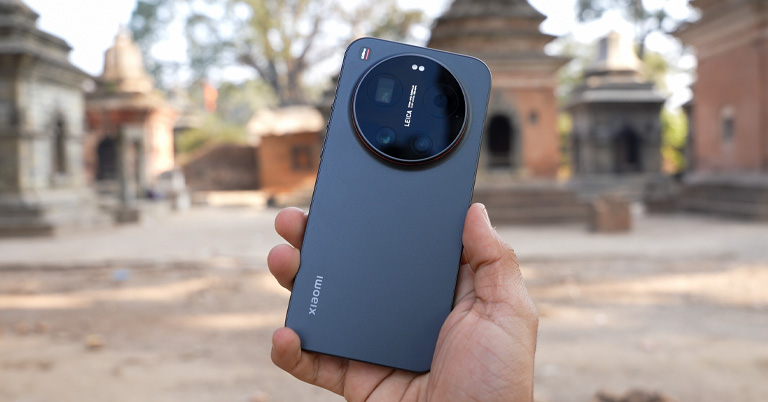
The Xiaomi 17 Ultra feels classy — especially in the black color option. The red ring around the camera module adds a nice bit of character. On the Leica special edition, that ring actually rotates mechanically and can be used for zooming, adjusting exposure, and even opening the camera app. It sounds a bit gimmicky, but for camera enthusiasts, it could actually be useful.
Like most 2026 flagships, this phone has a flat look — flat front, flat back, flat side frames — and the buttons feel nice and tactile, kind of reminiscent of older iPhone-style buttons. Weight distribution is also significantly better this year.
Interestingly, Xiaomi isn't using a glass back here — it's plastic, but it doesn't feel cheap at all. The reason is to keep the weight in check, since the huge camera sensors and big battery would make a glass back impractically heavy. Something similar has been seen with the Honor Magic series. Having said that, the Xiaomi 17 Ultra is still quite a heavy phone and not as balanced as something like the S26 Ultra.
Display
Xiaomi has sourced a good panel for the 17 Ultra — similar to last year's with everything you'd expect from a proper flagship display: 12-bit color, high PWM dimming, Dolby Vision support, and LTPO refresh rates.
But in 2026, the benchmark has gone up, especially after what Samsung did with the S26 Ultra privacy display. Compared to that, this looks normal now. Still, it's a very good display with great viewing angles, good touch response, and bright enough outdoors. Similarly, speakers are also really nice — they sound fuller and warmer, with clean vocals. Definitely better than Vivo or Oppo phones, though not quite at the iPhone level.
Performance
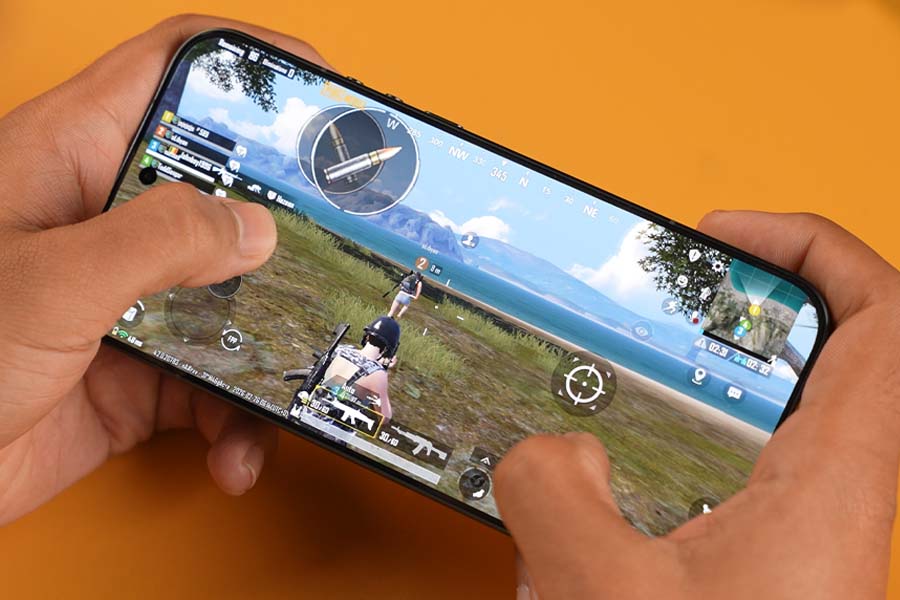
The Snapdragon 8 Elite Gen 5 with LPDDR5X RAM and UFS 4.1 storage handles everything without hesitation. And what's even better is there are no heating issues. Last year and the year before, heating was a real concern — this time it stays cool.
OS and UI
HyperOS 3 has clearly improved. Animations are smoother and it's getting closer to a truly polished experience — but not quite there yet, because HyperOS is still HyperOS. There are slight jitters here and there — for example, when swiping from Google Discover to the home screen there's a tiny stutter, which genuinely shouldn't exist on a phone running the Snapdragon 8 Elite Gen 5 with some of the fastest RAM and storage available.
Battery
The one thing that was a real surprise, and not in a good way, is the battery life. This phone has a 6,000mAh silicon-carbon battery, so naturally great battery life was expected. But screen-on-time came in at only around 6 to 7 hours, which shouldn't be happening with a battery this big. It clearly feels like an optimization issue with HyperOS and maybe a future update will fix it — because with this kind of capacity it should definitely be performing better.
Xiaomi 17 Ultra Review: Conclusion
For the most part, the Xiaomi 17 Ultra is a phone that impresses. The pricing is higher this time, but it's totally understandable given the RAM price hikes! There have been improvements in many areas — it's more refined, more mature, and getting closer to being a truly balanced flagship. But is it the most balanced flagship out there? Not yet. Something like Samsung still feels slightly more polished overall, and the software is still the bottleneck. Xiaomi could improve further by adding more meaningful AI features, refining animations, and improving battery optimization.
But when it comes to the camera experience, it's just so good. Going out on a weekend for a photo walk, shooting black-and-white portraits, capturing nature, chasing light — this is that phone. The camera experience feels serene. Pure. That Leica tuning, that dramatic black and white, that 1-inch sensor depth — it feels intentional.
Xiaomi 17 Ultra Review Pros and Cons
Pros
- Best-in-class main camera with 1-inch sensor
- Unique hardware variable zoom telephoto
- Outstanding portrait and low-light photography
- Strong rear video performance
- IP66 + IP68 + IP69 triple water resistance
Cons
- Disappointing battery life for the capacity
- The selfie camera is underwhelming at this price
- HyperOS still has occasional stutters
- Plastic back
Article Last updated: March 26, 2026