... but can it really challenge ASML's dominance and become a turning point for the global chip industry?
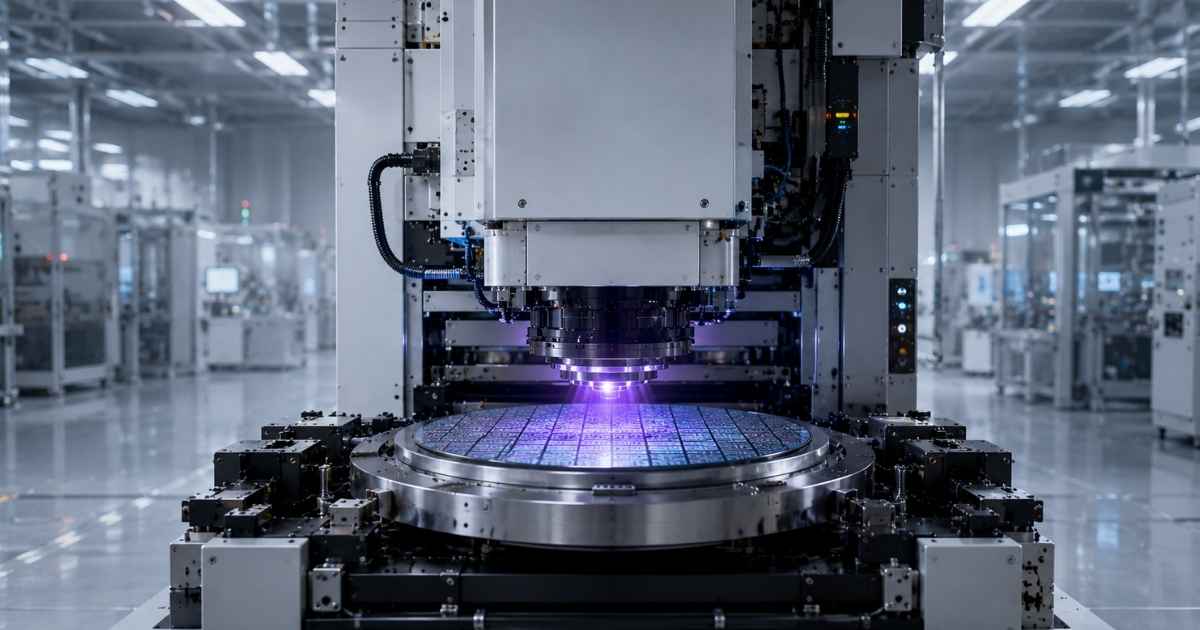
China has reportedly started producing its own immersion deep ultraviolet (DUV) lithography machines, marking a major milestone in its long-term goal of reducing reliance on foreign chipmaking technology. The move comes as China continues to face export restrictions from the US and its allies, which have made it difficult for local chipmakers to access advanced semiconductor equipment. According to Reuters, the first batch of these homegrown DUV lithography machines is expected to be delivered to leading Chinese semiconductor companies later this year.
Key Highlights
- China has started producing its own immersion DUV lithography machines for semiconductor manufacturing.
- The first batch of machines is expected to be delivered to major Chinese chipmakers later this year.
- The move aims to reduce China's reliance on foreign chipmaking equipment amid export restrictions.
- Although still behind the Netherlands' ASML, China's homegrown DUV machines mark a significant milestone for its semiconductor industry.
- The development could strengthen China's chip supply chain and reshape the global semiconductor landscape over time.
China's homegrown DUV lithography machines
What is DUV lithography?
Deep Ultraviolet (DUV) lithography is one of the key technologies used to manufacture semiconductor chips. It uses ultraviolet light to project tiny circuit patterns onto silicon wafers, which are then turned into processors used in smartphones, laptops, vehicles, AI servers, and other electronic devices.
Although the industry has moved toward the more advanced Extreme Ultraviolet (EUV) lithography for cutting-edge chips, DUV is still widely used. These machines remain essential for producing a large portion of today's semiconductors, making them a critical part of the global chip supply chain.
China starts local production of DUV lithography machines
China's DUV lithography project is being led by Shanghai Aishengna Electronic Technology Group, a state-backed company established in 2023. It brings together expertise from several domestic semiconductor equipment makers, including Shanghai Micro Electronics Equipment (SMEE).
According to Reuters, the first batch of machines will be delivered to major Chinese chipmakers such as SMIC (Semiconductor Manufacturing International Corporation), Hua Hong Semiconductor, and ChangXin Memory Technologies (CXMT) later this year. Production is expected to start small, with around five machines planned initially before scaling up in the coming years.
Why is China building its own lithography machines?
For years, Chinese chipmakers have relied heavily on foreign companies for advanced semiconductor manufacturing equipment. However, export restrictions imposed by the US, along with similar measures from the Netherlands and Japan, have made it increasingly difficult for Chinese firms to purchase advanced lithography systems from overseas suppliers.
As a result, China has accelerated investments in its domestic semiconductor industry. Developing homegrown lithography equipment has become one of the country's biggest priorities, helping local companies reduce their dependence on foreign technology while strengthening the overall chip supply chain.
China still has ground to cover
Despite the achievement, China's DUV machines are still believed to be behind ASML's technology in terms of performance, manufacturing experience, and production scale. So, this doesn't mean China has caught up with the Dutch company just yet.
Still, DUV technology remains highly relevant. Even without EUV, these machines can produce many of the chips used in smartphones, PCs, automotive electronics, and industrial devices.
- Also Read:
- Google now lets you recover your account with a selfie video
- Nepal Telecom Now Offers Online SIM Replacement — But How Does It Work Abroad?
- First Computer in Nepal: One Rented Machine That Started a Digital Revolution
Impact on the semiconductor industry
China's latest breakthrough is unlikely to challenge Advanced Semiconductor Materials Lithography (ASML)'s leadership overnight, but it does highlight the country's growing capabilities in semiconductor manufacturing equipment. If domestic production expands successfully, Chinese chipmakers could become less dependent on imported lithography systems in the years ahead. That would strengthen China's semiconductor supply chain and reduce the impact of future export restrictions.
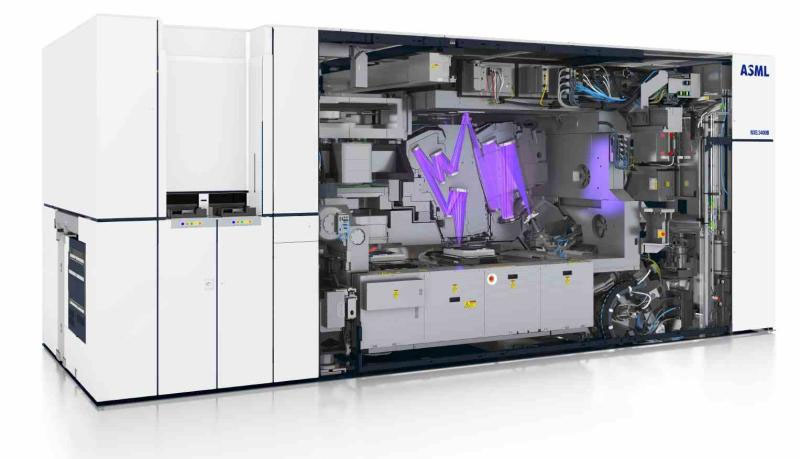
The development also caught investors' attention. Following Reuters' report, ASML's shares fell by more than 7% as the market reacted to China's progress in homegrown chipmaking equipment.
China's homegrown DUV lithography machines: Conclusion
China's decision to manufacture its own DUV lithography machines marks an important step in its efforts to build a self-reliant semiconductor industry. While the country's technology still trails industry leader ASML, successfully developing these complex systems shows that China is making steady progress despite ongoing export restrictions.
It might still take years before Chinese-made DUV machines can compete with the world's best lithography systems. However, if production scales up as planned, they could help local chipmakers reduce their dependence on foreign equipment and strengthen China's position in the global semiconductor supply chain.
My final thoughts
In my opinion, this development is less about challenging ASML today and more about preparing for the future. As geopolitical tensions continue to reshape the semiconductor industry, countries are increasingly investing in domestic manufacturing instead of relying on overseas suppliers. China's homegrown DUV machines are another sign of that shift, and it will be interesting to see how quickly the technology matures in the coming years.
- Meanwhile, you can check out our detailed comparison of this year's flagship mobile chips
Article Last updated: July 28, 2026