Even though the Xiaomi Pad 8 is a lot more expensive than its predecessor.
Why Trust Gadgetbyte?
At Gadgetbyte, we invest substantial hours into rigorously testing each product or service we review, guaranteeing that you make informed purchases. Learn more about our testing process.
Review Overview
4.2
Design and build
8.6/10
Display
8.5/10
Performance
9.3/10
Cameras
7/10
Software and UI
9.4/10
Battery
9.2/10
Audio
7.7/10
Value for money
8.7/10
While the new Xiaomi Pad 8 is a lot more expensive than its predecessor (thanks to the ongoing memory shortage), it's somehow still a great value. And other than its worse-sounding speakers, I didn't find any major issues with this tablet.
So when I reviewed the Xiaomi Pad 7 last year, I was really—and I mean really—struggling to find anything wrong with it. In fact, if anyone asked me, “What's the best example of a value-for-money product I've ever seen?”, I'd probably still point my finger towards the Xiaomi Pad 7.
And now, we have this guy. The new Xiaomi Pad 8. It starts at NPR 59,999 in Nepal, which is a 33% price jump over the Xiaomi Pad 7. I've always praised Xiaomi tablets for their insane value proposition, so this is definitely alarming.
But to be fair, it's not entirely Xiaomi's fault that the Pad 8 is suddenly so freakin' expensive than every other “Xiaomi Pad” before it.
So in case you haven't heard the news, there's a global memory shortage right now. Thanks to all the AI companies eating the entire memory chip supply of the world. The RAM shortage has gotten so out of hand that some analysts are predicting the worst decline in smartphone sales as well. With all that said, does the Xiaomi Pad 8 still make sense? Or are there better options in the Nepali market? Let me tell you all about it, but let's take a quick look at its specifications first.
Xiaomi Pad 8 review: Specifications
- Design and Build: 251.22 x 173.42 x 5.75 mm, 485 gm, 800 nits (peak brightness)
- Display: 11.2-inch IPS panel, 3.2K resolution, 144Hz refresh rate
- Chipset: Qualcomm Snapdragon 8s Gen 4 (4nm mobile platform)
- Memory: 8GB (LPDDR5X) / 12GB (LPDDR5T) RAM, 128GB (UFS 3.1) / 256GB UFS 4.1 storage (non-expandable)
- Software and UI: Android 16 with Xiaomi HyperOS 3.0 on top
- Cameras: 13MP f/2.2 rear, 8MP f/2.28 front
- Security: No fingerprint sensor
- Connectivity: No cellular connectivity, WiFi 7, Bluetooth 6.0, USB-C (3.2 Gen 1)
- Sensors: Accelerometer, Ambient light, Color temperature, Flicker, Gyroscope, Hall, Magnetic, Proximity, IR remote control
- Battery: 9,200 mAh with 45W fast charging (45W power adapter inside the box)
- Price in Nepal: NPR 59,999 (8/128GB) | NPR 69,999 (8/256GB)
Xiaomi Pad 8 review:
Design and build
- 251.22 x 173.42 x 6.18 mm, 485 grams
- Aluminum back/frames, glass front
- No IP rating
Now, if you look at the specs, the Xiaomi Pad 8 doesn’t bring too many upgrades over its predecessor.
| Xiaomi Pad 8 | Xiaomi Pad 7 | |
| Display | 11.2-inch, IPS LCD panel, 144Hz refresh rate | |
| Processor | Snapdragon 8s Gen 4 (4nm) | Snapdragon 7+ Gen 3 (4nm) |
| Cameras | 13MP main (rear), 8MP selfie | |
| Battery | 9,200 mAh (45W) | 8,850 mAh (45W) |
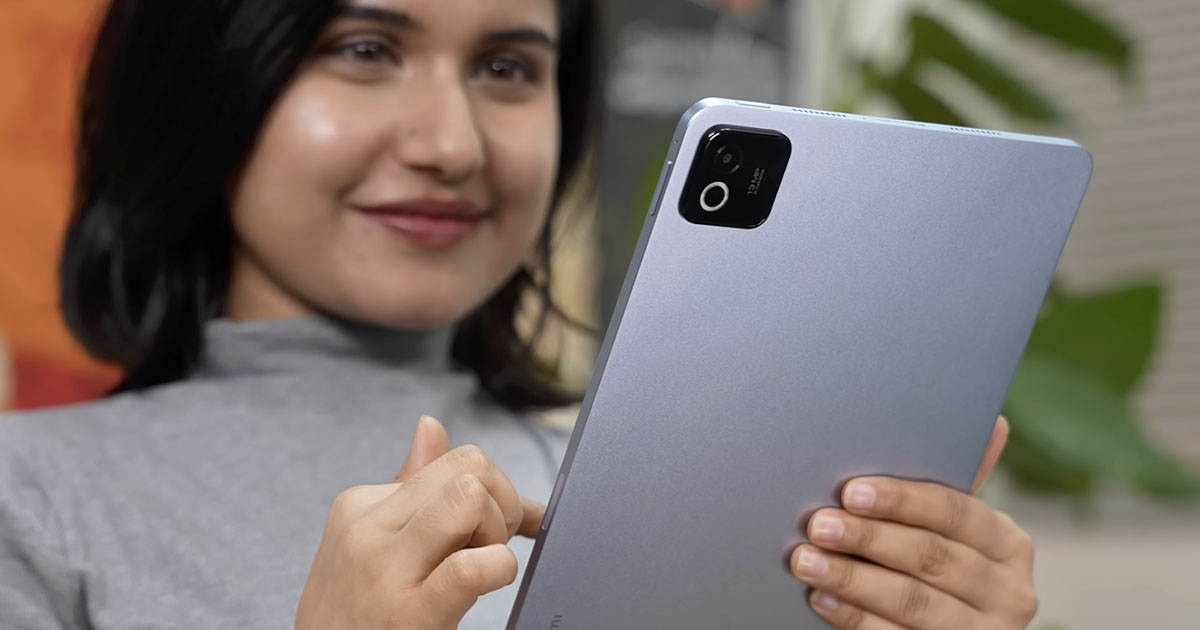
I mean, for one thing, its design is practically the same. It’s got the same full-metal build as the Xiaomi Pad 7, and even their color options are twinning!
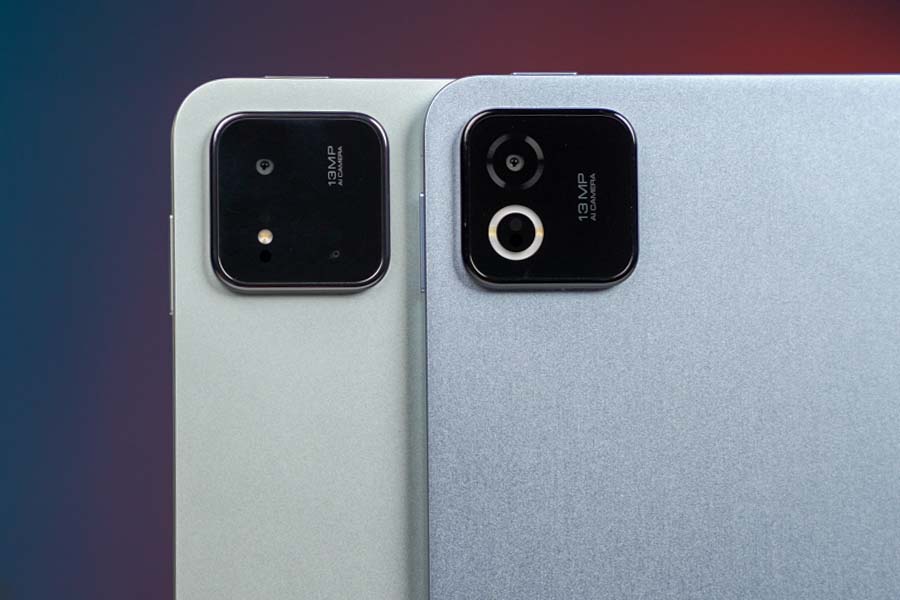
So it feels just as great to hold, and transferring files to and from an external drive on this thing is also quite fast with the same USB 3.2 connection as before. Instead of the slow USB 2.0 port that’s more common in other midrange tablets.
The only way you’d be able to tell these two apart visually is by looking at the flash module, since Xiaomi has gone with a circular flash this time.
The Xiaomi Pad 8 is slightly slimmer and lighter as well—which is always welcome—since I prefer tablets that are comfortable to hold for extended periods. Apple’s iPad Pro (review) was the perfect example of a “slim-and-light” tablet done right, but I feel like Xiaomi didn't really hit the bullseye here. Because its “slim” design has actually created a massive problem for this tablet that I'll talk about in just a minute.
Display
- 11.2-inch 3.2K IPS panel
- 144Hz refresh rate, 800 nits of peak brightness
- HDR10, Dolby Vision support
Alright. So while there were at least some changes in terms of design, the Xiaomi Pad 8's display is essentially a “copy-paste” job. Not that there's anything wrong with that, since the Xiaomi Pad 7 already had the best display for the price.
Wait—let me read some of its specs and you'll know exactly what I mean.
So the Xiaomi Pad 8 brings an 11.2” IPS panel with up to 144Hz refresh rate, 800 nits of peak brightness, a tack sharp 3.2K resolution, and 12-bit colors with perfect calibration right out of the box.

That means everything looks sharp and feels smooth when I’m browsing the web, it gets more than bright enough when I’m indoors, and binging my favorite shows is an absolute treat, too. Especially since the Xiaomi Pad 8 also has every HDR certification I could want!
Xiaomi also lets me configure it with a more expensive “nano-texture display” to get rid of light reflections and glare—which should be particularly useful for field workers and such who are constantly on the move. But unfortunately, that option isn't available in Nepal. And as far as I’m concerned, an OLED panel is the only thing that’s missing here!

How “slim” is "too slim"?
But remember that “massive problem” I mentioned before? Well, what’s happened is that while pushing for a slimmer design, the speakers on this guy have taken a stupid hit. ‘Cause the drivers on the Xiaomi Pad 8 now don’t have enough physical space inside the chassis to move air for a wider, spacious sound.
It still has a four-speaker system with Dolby Atmos support, but I found the audio quality on the Xiaomi Pad 7 to be far superior. It gets considerably louder; it sounds much more open and detailed, and it even reproduces bass notes quite well. So, yeah, the Xiaomi Pad 8 has downgraded speakers.
I was hoping Xiaomi would’ve taken all this time to fix the poor audio on the Pad 8 since I remember making the exact same complaint a couple of months ago—but maybe that’s simply not possible. The Xiaomi Pad 8 has downgraded speakers… that’s it.
Getting back to the display, I bet night owls aren’t gonna have any problem looking at this screen either. It can reduce blue light emissions at the hardware level, and it also offers DC dimming to prevent screen flickering.
So all in all, while the Xiaomi Pad 8 has a fantastic display, its mediocre speakers unfortunately leave a bad taste.
Performance
- Qualcomm Snapdragon 8s Gen 4 (4nm)
- 8/12GB RAM, 128/256GB storage (non-expandable)
- Android 16 with Xiaomi’s HyperOS 3.0 on top
- 4 years of OS and 6 years of security updates
Okay.
Do you want to know why the “Xiaomi Pad” lineup continues to be an insane value year-after-year? That’s because Xiaomi never messes up when choosing the processor. Never.
The Snapdragon 7+ Gen 3 chip on the Xiaomi Pad 7 was already so far ahead of other midrange tablets in the market—and now—the 8s Gen 4 upgrade continues that tradition.
Because the Xiaomi Pad 8 is easily the most powerful tablet in this segment. It has a faster CPU and GPU than the previous 7+ Gen 3, and also surprisingly better heat dissipation.
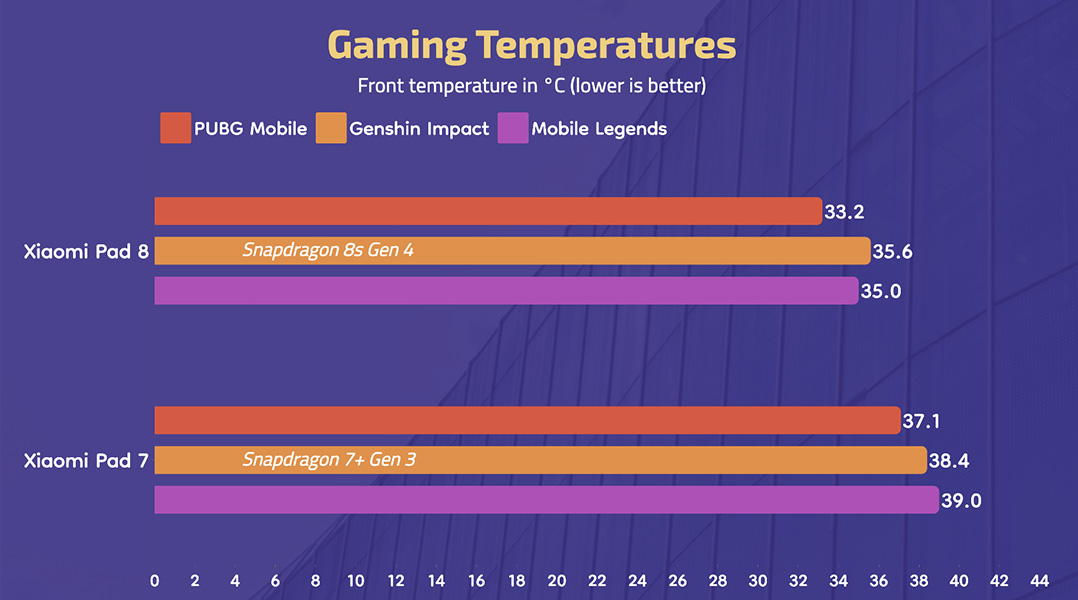
I say “surprising” because in my gaming tests, the Pad 8 had noticeably cooler temperatures despite its slimmer chassis. I still think Xiaomi needs to make a few updates to improve gaming performance, since it can’t play titles like “Mobile Legends” at 120 fps, which runs perfectly fine on the older Pad 7.
And besides a powerful processor, I love how Xiaomi has continuously improved its HyperOS software for big-screen devices.
Xiaomi's HyperOS continues to get better on tablets. I love it!
So last year's HyperOS 2 was mostly about one thing: AI features. I could generate text, images, or transcribe my voice notes… the usual stuff. Whereas with HyperOS 3, Xiaomi's focus has shifted to “productivity” instead. There are definitely some new AI stuff like the “AI Dynamic Wallpaper” thing that lets me animate my wallpaper in different styles—but the productivity push is clearly the highlight of HyperOS 3.
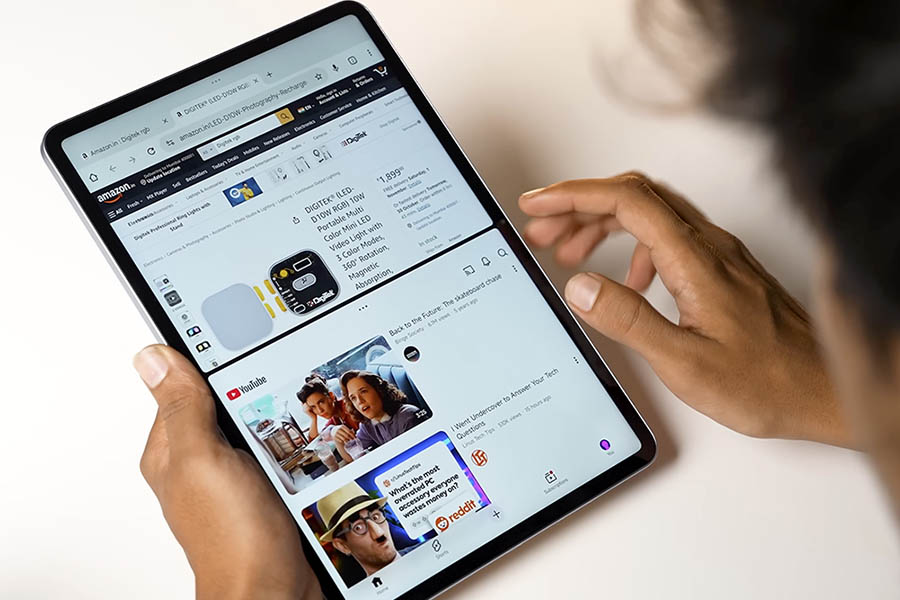
From the new “1:9” aspect ratio that makes using two apps in split-screen so much fun to the vertical split view, it's so easy to utilize the Xiaomi Pad 8's massive screenspace. And the “Workstation Mode” (which is Xiaomi's version of "Samsung DeX" that switches from Android to a PC-like desktop environment) can now hold more apps in the taskbar for easier multitasking, too.
Xiaomi also says HyperOS 3 supports a “PC-level browser” and a PC version of “WPS Office”, but both those things are in a “coming soon” status for now.
I gotta admit one thing though—I really wasn't expecting all the “Apple” integration inside Xiaomi's latest software. Most of them are phone-centric, like being able to mirror my Xiaomi phone on an iPad or a MacBook, but as someone who daily drives a MacBook, being able to view my notes or transfer files with the Xiaomi Pad so effortlessly felt pretty special.
Battery
- 9,200 mAh battery (45W charging)
- 45W adapter in the box
The Xiaomi Pad 8’s battery life is pretty special as well. I know its 9,200 mAh battery is just 4% larger than what we saw on the Pad 7—but when I tried draining their battery with everything from video playback to gaming and web conferences—the Xiaomi Pad 8 lasted exactly an hour more. Finishing with an impressive 9.5 hours of screen time.
The charging speed remains the same at 45W, but I love that this thing now supports 22.5W of reverse charging in case I need to top off my phone real quick.
Camera
- 13MP rear, 8MP selfie camera
Oh wait—I forgot to talk about its cameras. Which are nothing outstanding as always.

The worst part is that Xiaomi's “FocusFrame” feature, which is supposed to follow me as I move around during video calls, still doesn't work for some reason.
Xiaomi Pad 8 review: Conclusion
So that is all for my full review of the new Xiaomi Pad 8.
And needless to say, Xiaomi has once again bagged a winner with this guy. Its speakers kinda suck, and there's also some gaming-related hiccups for Xiaomi to sort out, but other than that, the Xiaomi Pad 8 is a fantastic midrange tablet.
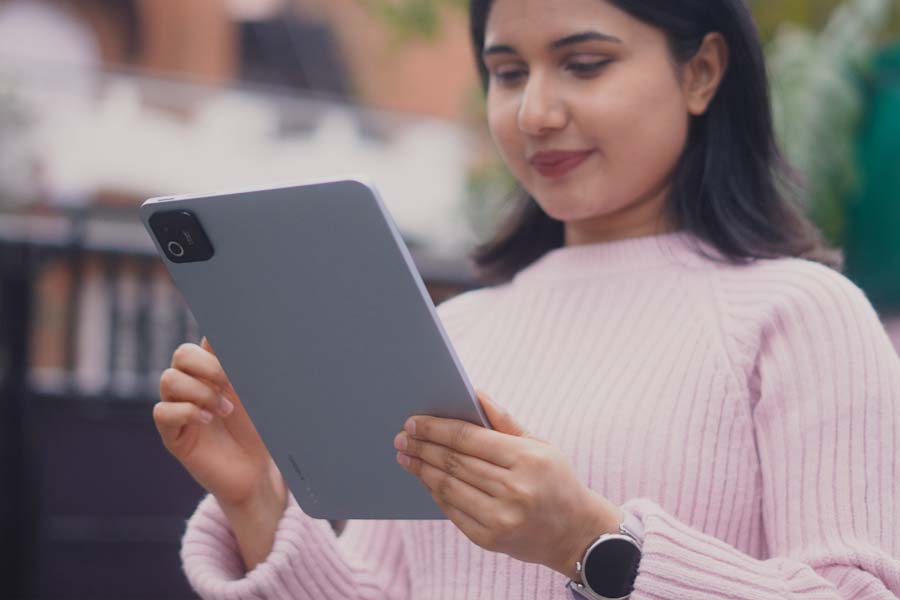
Now, about that price hike—I know it absolutely sucks. The “RAMpocalypse” has come for every consumer electronic device, and what once was a killer “value for money” isn't the same anymore.
The crazy thing is that even though the Xiaomi Pad 8 is a lot more expensive than its predecessor, there's still no real competition for this guy. I guess the Xiaomi Pad 7 itself would've been a viable option, but that's no longer available in Nepal.
Samsung's Galaxy Tab S10 Lite and Tab A11+ 5G are also available at a similar price to Xiaomi's latest midranger, but a quick peek into their specs will tell you that those two have worse display, worse performance, worse battery life… pretty much worse everything.
Whereas if you're a student looking for a "tablet + PC" setup with a keyboard and a stylus, I think that's when the Xiaomi Pad 8 begins flexing its “value for money” muscles once again. Especially if you manage to grab them while the pre-order offer lasts, because Xiaomi Nepal is giving away the “Xiaomi Focus Pen Pro” and the “Xiaomi Pad 8 Keyboard” for just NPR 4,999 each. Or just NPR 7,999 if you take 'em both.
Xiaomi Pad 8 review: Pros and cons
| Pros | Cons |
| • Great “everyday” tablet | • A bit expensive than before |
| • A neat combo of powerful performance + optimized software | • Its speakers are a clear downgrade |
| • Nice display, premium design | • Some gaming related hiccups |
| • All-day battery life |
- Watch our video review of Xiaomi Pad 8
Article Last updated: April 5, 2026